stud
bud
Sign up
Log in
Home
Library
Explore
SAT
More
Unit 3 Cells Flashcards | StudBud
Explore
/
Unit 3 Cells
Unit 3 Cells
36 terms
·
StudBud Administration
·
367 plays
Unit 3 review
Flashcards
36 cards
F
Practice quiz
P
Host live
L
Questions
36
Answers
1
Which process of moving materials through a cell membrane requires energy?
Bus Transport
Passive Transport
Cellular Respiration
Active Transport
2
What organelle is involved in photosynthesis?
nucleus
chloroplast
mitochondria
3
What organelle is involved in cellular respiration?
nucleus
mitochondria
chloroplasts
4
From least to most complex, how are organisms organized?
tissue-->cell-->organ-->organ system-->organism
organism-->organ system-->organ-->tissue-->cell
cell-->organ-->tissue-->organism-->organ system
cell-->tissue-->organ-->organ system-->organism
5
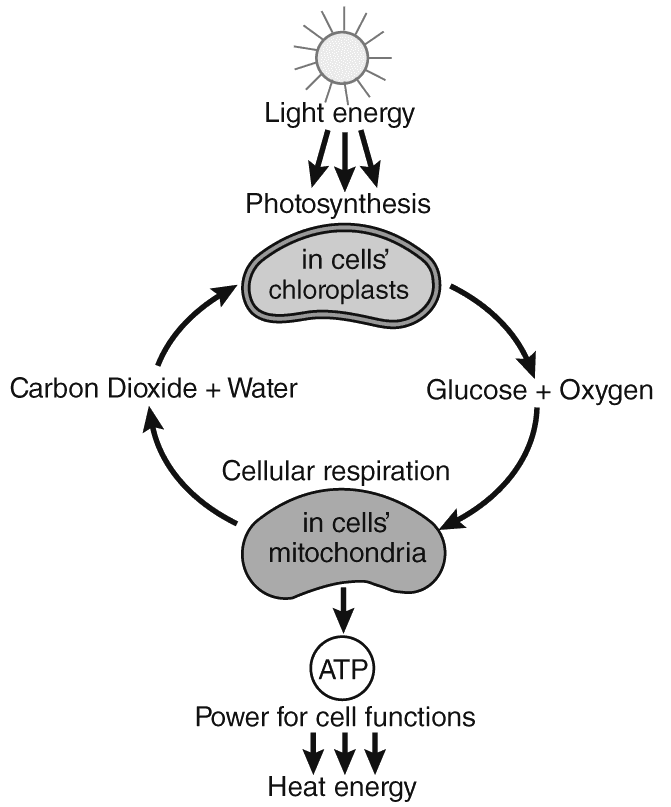
What are the products of cellular respiration?
ATP (energy)
Carbon Dioxide + Water and ATP (energy)
none of the above
Glucose + Oxygen
6
Which organelle contains the cell's genetic information?
mitochondria
ribosome
chloroplast
nucleus
7
2 or more atoms bonded together is a ______.
atom
molecule
compound
8
How will the molecules move in this illustration as a result of diffusion?
The molecules will move out of the cell.
The molecules will not move.
The molecules will disappear.
The molecules will move into the cell.
9
Unicellular organisms divide to ____________.
get food
die
reproduce
10
In which cell structure does photosynthesis take place?
ribosome
mitochondria
vacuole
chloroplast
11
What is an atom?
the smallest thing that makes up matter
2 or more atoms bonded together
a molecule
12
1. What are the products of Photosynthesis? 2. Cellular Respiration?
ATP (energy)
Glucose + Oxygen
1. Glucose + Oxygen 2. Carbon Dioxide + Water and ATP
Carbon Dioxide + Water
13
What is the plant making during photosynthesis?
glucose and oxygen
chloroplasts
cells
14
Which of the following must all cells do to survive?
absorb water
grow
use oxygen
obtain energy
15
Blood is a ________.
cell
organ
tissue
organ system
16
Which two organelles are present in plant cells, but not animal cells?
chloroplast and cell wall
mitochondria and chloroplast
vacuole and ribosome
cell wall and cell membrane
17
What was Robert Hooke's major finding that contributed to the cell theory?
He found the cell
All plants are made of cells
He found the nucleus
He invented the microscope.
18
Which have specialized cells, like a division of labor?
multi-cellular organism(s)
uni-cellular organism(s)
living organism(s)
non-living organism(s)
19
Moving particles across the membrane without energy is called...
homeostasis
active transport
passive transport
20
Which number indicates the "powerhouse" of the cell?
6
1
9
12
21
The smallest thing that makes up living things is _________
organ system
cells
tissue
22
Which type of cell has a nucleus?
prokaryote only
both prokaryotes and eukaryotes
eukaryote only
23
What do plants use cellular respiration for?
reproduction
get energy from the food they make
breathing
24
Which of the following is an example of an organ?
yeast
ribosome
liver
nucleus
25
Sweating on a hot day is your body's way of keeping you cool. This process maintains___________
karyotyping
homeostasis
homology
respiration
26
Table Salt (NaCl) is an example of a _________.
atom
molecule
compound
27
Which organelle is responsible for making proteins in both plant and animal cells?
nucleus
ribosomes
golgi apparatus
mitochondria
28
An example of an organ system is the _________ system.
nucleus
blood
digestive
29
Which of the following is NOT part of the cell theory?
All cells come from preexisting cells
All organisms are made of one or more cells
All cells have a nucleus
Cells are the basic units of life
30
The Cell Theory has _____ parts.
4
3
2
31
The stomach and brain are examples of ____________.
organs
organ systems
tissues
cells
32
How is the vacuole different in plant cells versus animal cells?
plants do not have a vacuole
plants have many small vacuoles
plants have one large central vacuole
none of the above
33
Groups of cells that work together to perform similar functions are:
organ systems
tissues
molecules
organs
34
Homeostasis occurs in...
tissues
organs
all of the above
organ systems
35
Which part(s) of a plant are made of cells?
stem only
leaves only
all of the above
roots only
36
What does DNA do?
contains genetic information
codes the proteins for our bodies
both answers