stud
bud
Sign up
Log in
Home
Library
Explore
SAT
More
SSWH1 Flashcards | StudBud
Explore
/
SSWH1
SSWH1
20 terms
·
StudBud Administration
·
2,645 plays
SSWH1
Flashcards
20 cards
F
Practice quiz
P
Host live
L
Questions
20
Answers
1
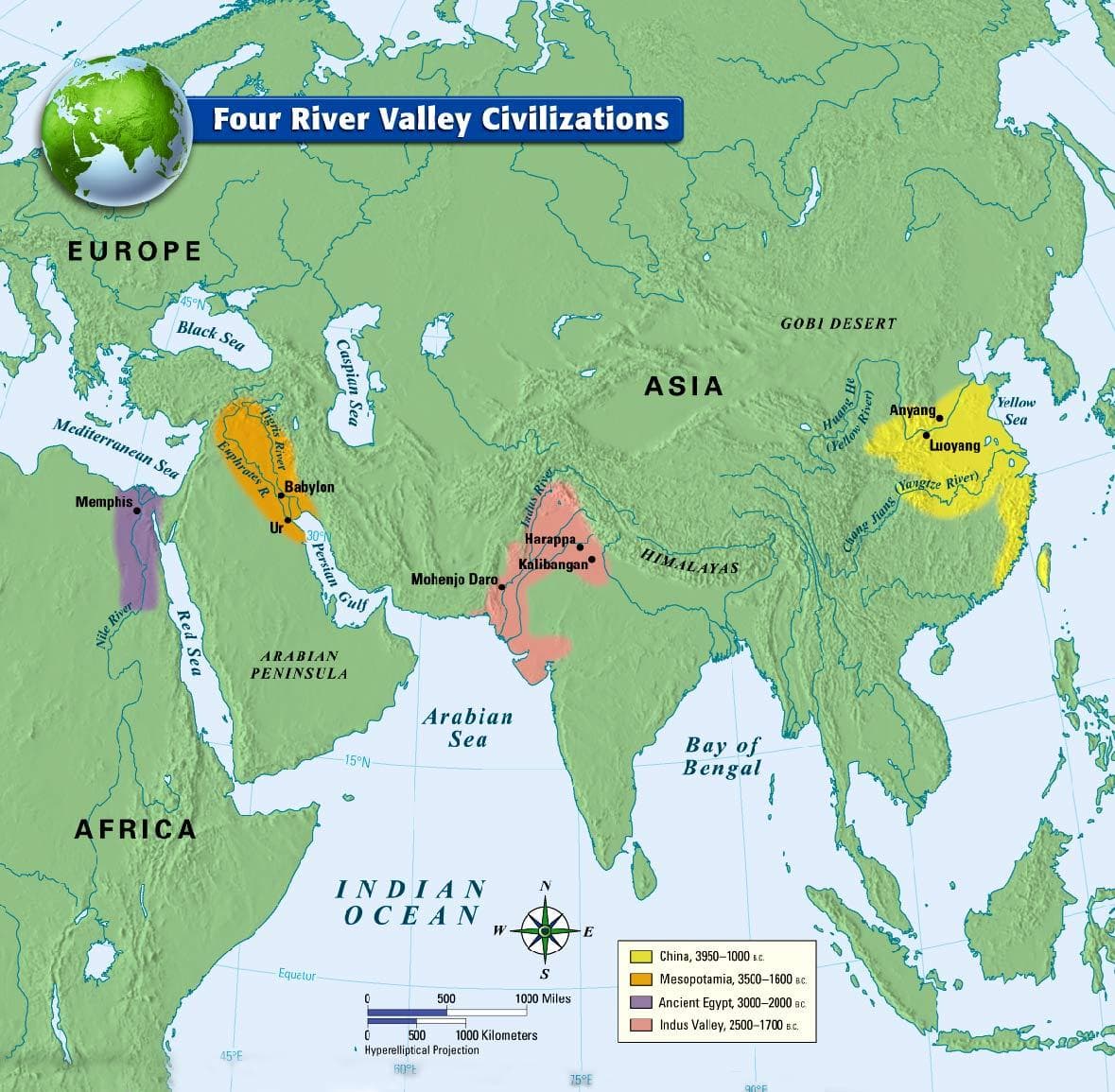
Which is true of most ancient civilizations - especially in Mesopotamia?
following animal herds to water sources
cultivating crops in rich fertile valley
developing navigational skills for fishing
establishing overseas trade for food supplies
2
City-state government, Cuneiform writing, & a Lunar calendar are all achievements of the:
Chinese
Egyptians
Sumerians
Indians
3
Which achievement is credited to the Ancient Hebrews?
They were the 1st to build cities
They were the 1st to use writing
They were the 1st to use metal
They were the 1st to practice monotheism
4
Which is true of the Ten Commandments:
They confirmed the need for social equality.
They helped enforce the authority of secular leaders.
The established a structure of government.
The emphasized the importance of ethical behavior
5
Which part of Egypt was considered Upper Egypt?
the desert
the delta
the river
the jungle
6
Cuneiform & hieroglyphics are what cultural aspects of civilization?
legal codes
religion
writing
civic institutions
7
Which is true of Hammurabi's Code:
civil resolution of disputes
commitment to equal protection
protection of social hierarchy
pursuit of economic justice
8
The Sumerians, Babylonians, and Assyrians all lived in which geographic region?
Palestine
Mesopotamia
China
Mesoamerica
9
Which two achievements are the Phoenicians most known for?
Their alphabet & their numerals
Trade & their alphabet
Trade & their military
Monotheism & the alphabet
10
What impact will Hammurabi's Code have on future gov'ts?
Set the groundwork for new forms of gov't
Creates the idea of using slaves for manual labor
Encourages military conquest
Creates a religious-based gov't
11
Which is true of Ancient Egypt:
Upper Egypt was the river while Lower Egypt was the delta
Lower Egypt was the river while Upper Egypt was the delta
They buried the dead on the east bank of the Nile
They were monotheistic
12
Egypt & Mesopotamia each had different valuable minerals. Which is most likely true:
They created a military alliance with each other
They traded with each other
Laws were made to protect these resources
Each gov't worked to redistribute wealth
13
Which part of Egypt was considered Lower Egypt?
the river
the delta
the jungle
the desert
14
Which DOES NOT fit in terms of the Ancient Egyptians?
They were monotheistic
They traded with Rome & Sumerians
They buried their dead on the west bank of the Nile
They were a theocracy
15
Sumer was governed by religious leaders who enforced religious laws. Sumer was a(n):
Democracy
Theocracy
Oligarachy
Monarchy
16
How did the Code of Hammurabi affect Babylonian society?
by limiting government authority
by clarifying the role of government
by enforcing social equality
by stabilizing the economic system
17
What was the most important impact seen as humans abandoned hunting & gathering?
New plants protected them from famine
Agriculture allowed job specialization
New forms of energy were discovered like nuclear power
New weapons like the musket allowed for better protection
18
Physically, where do many ancient civilizations first develop
along rivers
in North America
in the southern hemisphere
at the tops of mountains
19
What impact did the Egyptians have on the Romans?
Rome adopted Egypt's gov't
Rome adopted Egyptian military techniques
Egyptians migrate to Rome
Seaports increased trade
20
What does Mesopotamia mean?
mandate of heaven
civil service
examination system
between the rivers