stud
bud
Sign up
Log in
Home
Library
Explore
SAT
More
Evolution and Natural Selection Flashcards | StudBud
Explore
/
Evolution and Natural Selection
Evolution and Natural Selection
35 terms
·
StudBud Administration
·
4,126 plays
Test your knowledge of Evolution and prepare for our upcoming TEST!
Flashcards
35 cards
F
Practice quiz
P
Host live
L
Questions
35
Answers
1
An organism that is made up of a single cell
Onicellular
Unicellular
Manycellular
Multicellular
2
Charles Darwin's key principle that helpful mutations help some organisms survive
Overproduction
Adaptation
Variation
Selection
3
When humans select the trait that they want in an organism and breed for it.
Natural Selection
Artificial Selection
Nutritional Selection
My way, or the highway
4
Which answer is the correct way to write human beings scientific name?
homo Sapien
Homo Sapien
homo sapien
Homo sapien
5
The image below is an example of what?
Isolation
Speciation
Vestigial Organ
Variation
6
Which fossil would likely be the oldest found at a dig site?
100 ft. deep underground
50 ft. deep underground
15 ft. deep underground
5 ft. deep underground
7
Which of the following is NOT one of Charles Darwin's key principles?
Selection
Overproduction
Isolation
Variation
8
Which of the following about fossils is correct?
Fossils do not prove dinosaurs existed
The only way to find fish fossils is dig underwater
Fossils near the surface are very old
Full fossil skeletons are rare
9
When a single species of organism evolves into two or more new species
Selection
Isolation
Variation
Speciation
10
When one fossil is compared to another to determine its age.
Blind Dating
Radioactive Dating
Relative Dating
Absolute Dating
11
The giant crater off the coast of Mexico that was formed when an asteroid hit the Earth.
Mexican Crater
Chill-out Crater
Chicken Crater
Chicxulub Crater
12
Which theory explains why Abingdon Island tortoises have longer necks
Fossils
Ancestor
DNA
Evolution
13
Any living thing that is made up of more than one cell.
Multigrain
Unicellular
Manycellular
Multicellular
14
A remnant of a body part that serves no current purpose, but connects to an ancestor
Ancestry
Speciation
Arm bone
Vestigial Organ
15
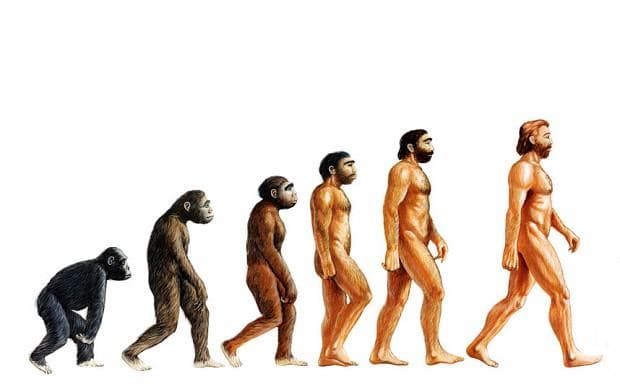
The theory that life changes over millions of years of time.
Growing up
Natural Selection
Evolution
Genetics
16
Using similarities in living and extinct species to prove relationships and understand ancestry
Biological Evidence
Genetic Evidence
CSI Evidence
Fossil Evidence
17
When huge numbers of species die, or become extinct, in a very short time.
Mass Extinction
Eradication
Extinction
Many Extinction
18
When nature chooses which organisms survive based on their adaptations.
Evolution
Only the strong survive
Natural Selection
Speciation
19
A statement based on observation and experimentation
Scientific Theory
Scientific Hypothesis
Scientific Observation
Scientific Law
20
When minerals replace the bone of an organism to create a fossil.
Minerva Fossil
Mineral Fossil
Bone Fossil
Preserved Fossil
21
Charles Darwin's key principle that the best traits will survive and be passed on to offspring
Variation
Adaptation
Selection
Overproduction
22
When an ancient organism, like a woolly mammoth, is preserved in ice.
Refrigerated Fossil
Preserved Fossil
Bone Fossil
Mineral Fossil
23
When life is separated, preventing them from breeding or intermingling
Speciation
Selection
Variation
Isolation
24
Since all three structures are similar, but different, these organisms have a common what?
Environment
Variation
Food supply
Ancestor
25
When a hard bone, tooth, or shell becomes fossilized.
Mineral fossil
Preserved fossil
Bone fossil
Fossil
26
When the remains of an organism are preserved in rock.
Fossil
Sedimentary
Igneous
Metamorphic Rock
27
Which scientist created the modern idea of Evolution?
Gregor Mendel
Jean Baptiste de Lamarck
Robert Hooke
Charles Darwin
28
The extinction that wiped out the dinosaurs
Cretaceous Extinction
Permian Extinction
Jurassic Extinction
Triassic Extinction
29
Charles Darwin's key principle that organisms lay thousands of eggs so that some will survive
Selection
Variation
Adaptation
Overproduction
30
Charles Darwin's key principle that organisms in a group will be different genetically
Selection
Adaptation
Overproduction
Variation
31
When the rock that a fossil is in experimented on to find the exact age the fossil was formed.
Relative Dating
Radioactive Dating
Absolute Dating
Double Dating
32
Using similarities in DNA to understand how closely related two organisms might be
Genetic Evidence
CSI Evidence
Fossil Evidence
Biological Evidence
33
An early form of an organism from which more modern species evolved from
Ancestor
Relative
Brother
Grandmother
34
Using discovered fossils to assist in proving the theory of evolution
Genetic Evidence
CSI Evidence
Fossil Evidence
Biological Evidence
35
Which time period of Earth did NOT have dinosaurs alive?
Triassic
Cretaceous
Permian
Jurassic