stud
bud
Sign up
Log in
Home
Library
Explore
SAT
More
Periodic Table: Organization and Trends Flashcards | StudBud
Explore
/
Periodic Table: Organization and Trends
Periodic Table: Organization and Trends
40 terms
·
StudBud Administration
·
1,798 plays
Imported from external platform
Flashcards
40 cards
F
Practice quiz
P
Host live
L
Questions
40
Answers
1
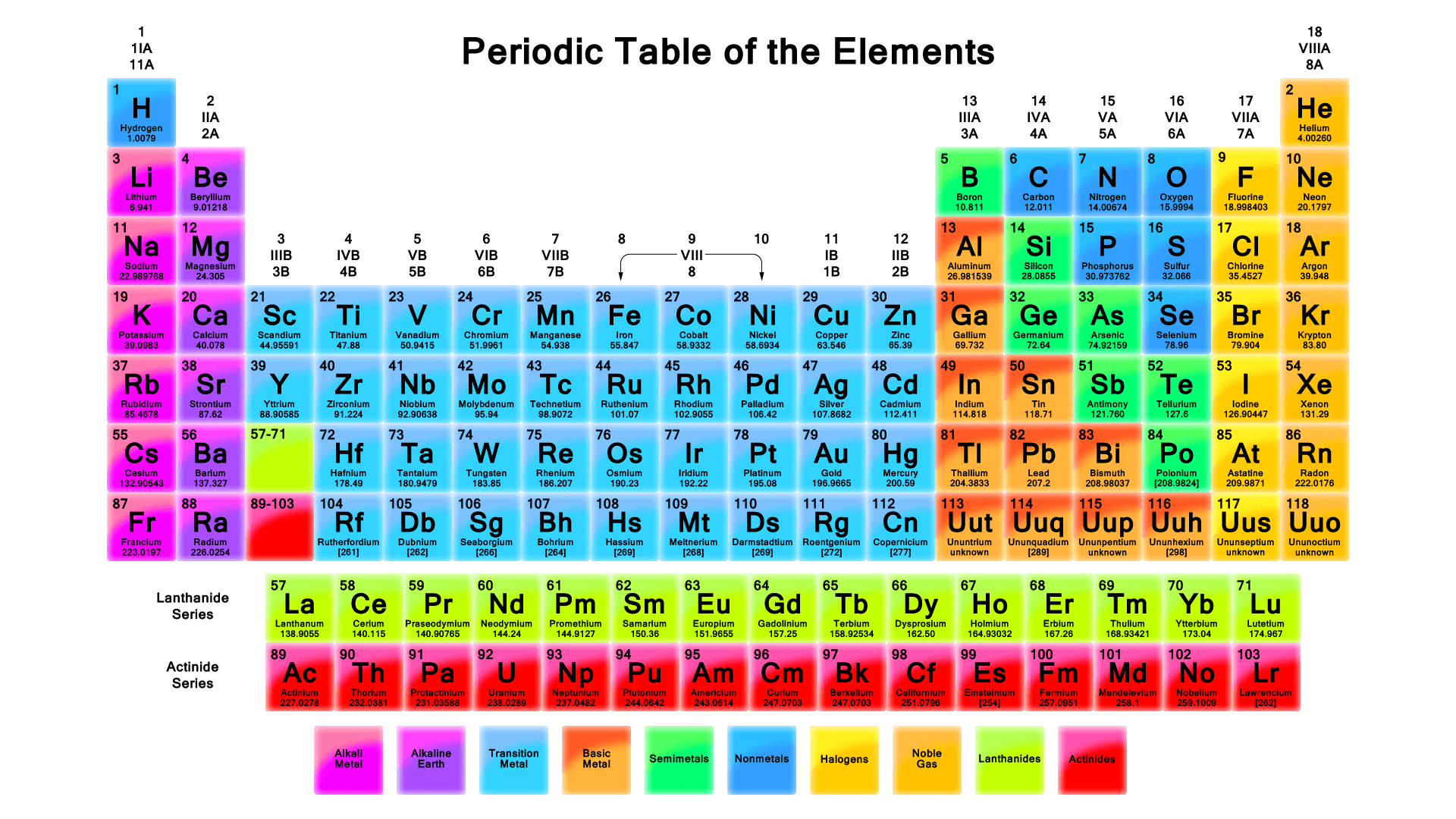
What family is circled in red?
mettaloids
noble gases
inner tansition metals
halogens
2
The electrons in the last shell are called __________ electrons.
outside
orbital
valence
standard
3
The widest block of the periodic table is the _____ block.
s
f
p
d
4
How many periods are there in the periodic table?
7
9
8
10
5
What is the electrical charge of an anion?
negative
positive
neutral
6
Which term describes a pattern of repetition of elemental properties with every eighth element?
law of periods
law of triads
Mendeleev's law
law of octaves
7
The rows of the PT are the ________.
Orbitals
Families
Periods
Blocks
8
Hydrogen is REALLY, REALLY an alkali metal. (REALLY)
False
True
9
Which of the following would be the shiniest?
Metal
Non-Metal
Mr. Oliva's forehead
Metalloid
10
All metals are solid at room temperature except...
neon
bromine
iodine
mercury
11
What side of the PT are the non-metals on?
Bottom
Top
Right
Left
12
Which element requires the most energy to remove an electron?
Li
Ne
Cl
O
13
Which term describes a metal's ability to be shaped?
malleable
ductile
conductible
coloful
14
___________ organized the PT by atomic number.
Dobereiner
Moseley
Newland
Mendeleev
15
Which of the following is NOT a noble gas?
He
Ne
Ar
H
16
Which is LARGER? (look in upper left of PT)
Mg
Be
17
What part of the periodic table is the most elctronegative?
bottom right
top left
bottom left
top right
18
Which is LARGER?
Ca +
Ca
19
A cation gets ____________ compared to its atom.
colder
smaller
larger
hotter
20
The amount of energy it takes to remove an electron is the ____________ energy.
cationization
recreation
anization
ionization
21
The inner transition metals are part of the _____ block.
f
d
p
s
22
What "block" of orbitals are these elements categorized as?
f
p
s
d
23
Choose the larger atom
Ca
K
24
The number of protons is ALWAYS equal to the _________.
neutrons
atomic number
electrons
atomic mass
25
What element group is this?
noble gases
alkali metals
mettaloids
halogens
26
What orbital is the last electron in here; what block is this?
f
p
d
s
27
What metal is this?
copper
iron
silver
aluminum
28
Electronegativity is the atom's desire to _______ electrons and get _____.
gain; larger
gain; smaller
lose; larger
lose; smaller
29
A "liking" of electrons is known as...
Isotopes
Valence
Electron affinity
Ionization energy
30
Who is the "father of chemistry" - the person who is credited for developing the first PT?
Mendeleev
Moseley
Pauling
Dobereiner
31
Halogens like to...
lose electrons to be like noble gases
gain electrons to be like alkali metals
gain electrons to be like noble gases
lose electrons to be like metalloids
32
All elements above atomic number __________ are radioactive.
20
84
44
62
33
This demonstration represents an an elements atom size going...
right to left
left to right
top to bottom
bottom to top
34
What family is highlighted in blue?
alkaline earth metals
alkali metals
transition metals
semi-metals
35
The most electronegative element is located...
bottom left
bottom right
top right
top left
36
The size of atoms get _____ as they go across (left to right) on the PT?
Bigger
Smaller
37
The columns of the PT are referred to as ______.
Valence
Families
Periods
Orbitals
38
Which of the following would be the most colorful?
Mr. Oliva's personality
Metalloids
Metals
Non-Metals
39
Where is the largest element located on the PT?
bottom left
top left
bottom right
top right
40
What is the charge of oxygen when it becomes an anion?
-1
+1
+2
-2