stud
bud
Sign up
Log in
Home
Library
Explore
SAT
More
pART 2 Unit 4: South, East, and Southeast Asia Flashcards | StudBud
Explore
/
pART 2 Unit 4: South, East, and Southeast Asia
pART 2 Unit 4: South, East, and Southeast Asia
46 terms
·
StudBud Administration
·
161 plays
AP Art History Review
Flashcards
46 cards
F
Practice quiz
P
Host live
L
Questions
46
Answers
1
These sculptures are meant to symbolize
regeneration
sinfulness
subjugation
inspiration
2
Western influences appear in Jahangir Preferring a Sufi Shaikh to kings in
the appearance of putti and King James I
the medium, painted miniature
the garments of Bichitr
the hourglass throne
3
The Buddha appears symbolically in all the following ways except:
wheel
tree
footprints
moon
4
This funeral banner was made for ___________________ during the ______ dynasty.
Lady Dai, Qin
Lakshmi, Qin
Lady Dai, Han
Devi, Han
5
The Hall of Supreme Harmony comes from this complex that was made in this time period
Forbidden City, 10th c. CE
Angkor Wat, 900-1400 CE
Forbidden City, 15th c.
Angkor Wat, 1400-1800 CE
6
Characteristic of Night Attack at Sanjo Palace are all of the following EXCEPT
Birds eye view
Strong diagonals
Architecture mixed with natural setting
Linear one point perspective
7
The following are true of these gardens EXCEPT:
the resemble large-scale natural formations found in nature
they are asymmetrical
they are Zen gardens
they contain tea houses
8
This Silla Crown was probably worn by
a wealthy statesman during ceremonial occasions
a king in the role of shaman
a child during coming of age ceremony
a queen during a wedding ceremony
9
This story is about all the following EXCEPT:
battle for the souls of the Cambodian people
the gods and devils had to work together to release amrita
victory of good over evil
how devas became immortal
10
Borobudur mirrors the path to enlightenment as pilgrims make their way to the top level or
samsara
nirvana
world of formlessness
world of forms
11
In Shiva Nataraja the dwarf symbolizes
ignorance
fear
time
knowledge
12
A monumental Buddhist site in Indonesia is
Longman Caves
Borobudur
Ankgor Wat
Stupa at Sanchi
13
This Buddhist site demonstrates how Buddhism spread from India to China on the silk road
Nan Madol
Longmen Caves
Angkor Thom
Borobudur
14
The churning of the ocean of milk is found here
Longman Caves
Borobudur
Angkor Wat
Angkor Thom
15
The following are true of the temples at Angkor EXCEPT:
they were built in Cambodia
they were constructed by two different Khmer kings
Angkor Thom features images of Jayavarman as Shiva
Angkor Wat was built to resemble Mt. Meru
16
The following are true of Todai-Ji EXCEPT:
it is a Buddhist temple
contains the largest metal cast Buddha
it was a part of Emperor plan to unite Japan using religion
it is in its original form
17
This painting comes from the ______________ School.
Ukiyo-e
Rinpa
Literati
Ecole des Beaux Arts
18
Ukiyo-e is the classification used for artwork made in Japan during this time period
20th c. CE
15th-16th c. CE
8th-10th c. CE
17th-19th c. CE
19
The entrance of Angkor Thom featured
Shiva as Nataraja
Three-headed Vishnu
faces of Jayavarman VII as a Buddha or Bodhisattva
Suyavarman II as Vishnu
20
Chinese blue and white porcelain was a result of
the development of Prussian blue in Europe
Iranian potters exporting Chinese-inspired wares
the influence of Dutch delftware
trade between China and Iran, in the Mongol empire
21
The portrait of Sin Sukju emphasizing Confucian and Korean traditions with
focus on connecting spirit and natural world
a focus on self awareness and enlightenment
emphasis on duty and loyalty, and ancestor worship
emphasis on yin yang and balance of opposites
22
Borobudur is most similar in form and function to
Great Stupa at Sanchi
Lakshmana Temple
the Taj Mahal
Longmen Caves
23
The terracotta warriors were made in 221-209 BCE, a century after
the Great Stupa at Sanchi
Borobudur
Jowo Rinpoche
Lakshmana Temple
24
This monument is located in
China
South America
India
Japan
25
These sculptures adorn the Lakshmana Temple from this dynasty in the 10th c.
Mughal
Qin
Chandela
Han
26
The FORM of this work, from 13th century Japan, reflects its intended function as
handscroll to be unrolled in sections for private viewing
funerary text for a deceased warrior
wall decoration for a diplomat's reception hall
decorative screen to divide a room
27
The Japanese artist that reinvigorated printmaking by layering color and depicting genre scenes
Fan Kuan
Katsushika Hokusai
Bichitr
Ogata Korin
28
The Nio Guardian Figures at Todai-Ji function is
represent the kei school of architecture
combine human and animal spirits
protect the area behind them
make emperor Shomu appear fierce
29
The advantages of printmaking, as seen in The Great Wave, include all EXCEPT
easy to mass produce
prints can only be made by the artist
appeal to a wide audience
they are cheap
30
The Great Stupa at Sanchi was made during this time period
400-800 CE
1500 BCE
300 BCE-100 CE
1200-1500 CE
31
The arrangement of stones and raked white sand in the dry garden of Ryoan-ji is intended to
encourage circumambulation
represent a typical Japanese landscape
promote study and meditation
protect and guide the spirits of the dead
32
All of the following are true regarding Lakshmana temple EXCEPT
it is dedicated to the gods
it is symbolically a cosmic mountain
it is a southern style temple
it is built in post and lintel construction
33
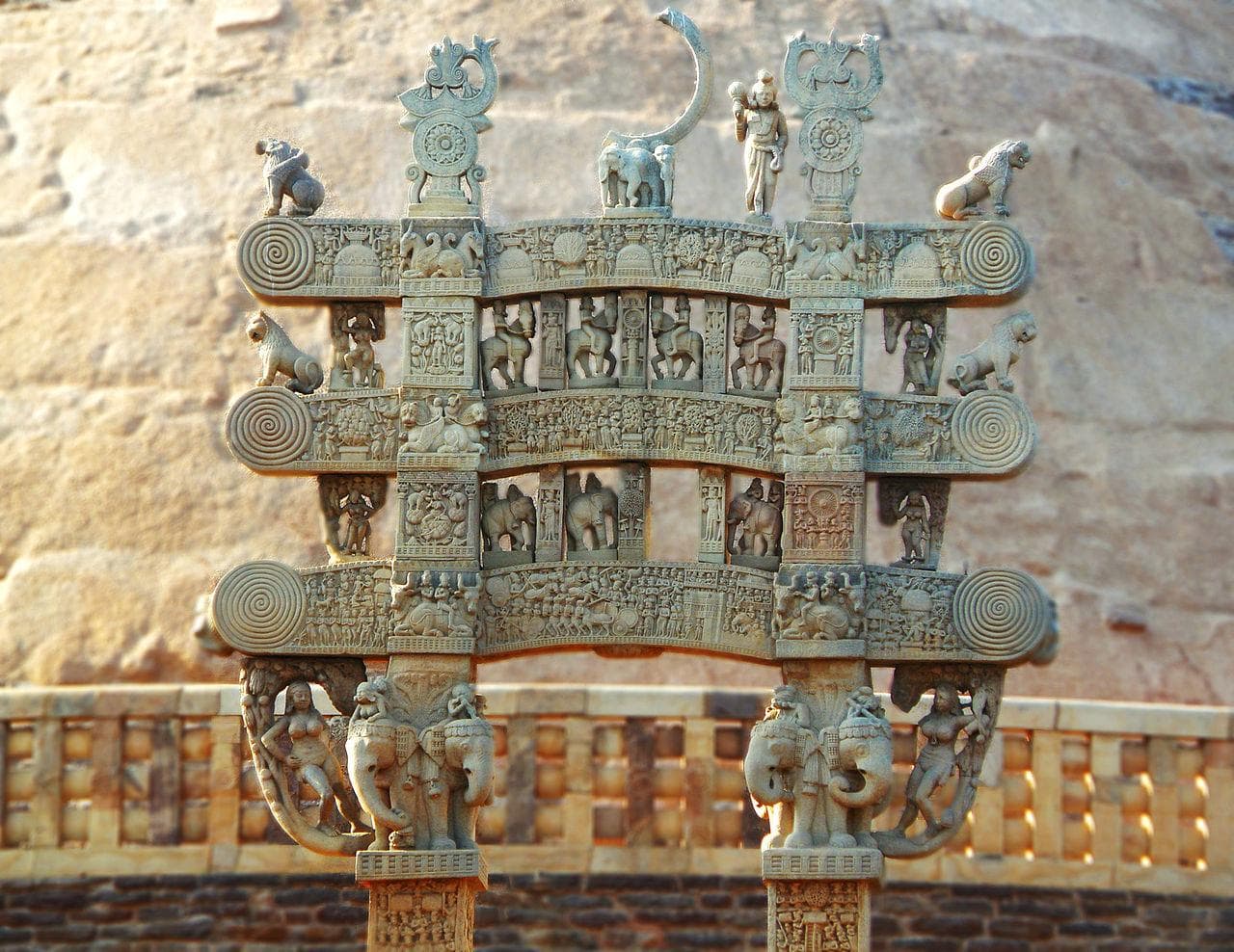
The 4 free-standing arched gateways seen at Stupa at Sanchi are called
axis mundi
masts
umbrellas
toranas
34
Travelers Among Mountains and Streams and Portrait of Sin Sunkju were both made using
ink on silk
woodblock printing
ink on rice paper
oil paint on canvas
35
The _______________ resides in the inner sanctum, or _____________, in the Lakshmana Temple
relic, harmika
murti (sculpture), garba griha
shikhara, mandapa
yashti, torana
36
The Forbidden City is organized using all of the following EXCEPT:
an axial plan
a mandala plan
with the Emperor's residence farthest from the main gate
in harmony with Confucian thought
37
This banner is unique because
It features the earliest known portrait in Chinese art
all the objects Lady Dai was buried with were burned
features first use of linear perspective
First appearance of yin yang symbol
38
At Sanchi, the ___ is the axis mundi, and the ___ are gates.
yasti; chatras
yasti; torana
chatras; stupa
chatras; yasti
39
A person who is able to reach nirvana but delays doing so out of compassion for others is a
Bodhisattva
Deogarth
Buddha
Shiva
40
The designers of the terra cotta warriors solved the challenge of creating a project on such a vast scale by
hiring many foreign artists familiar with diverse sculptural traditions
shaping varied sculptures from clay with the help of interchangeable molds
creating large numbers of identical sculptures through lost wax casting
incorporating sculptures from other sites conquered by the emperor
41
The David Vases were located in a
Hindu temple
Buddhist stupa
grave mound
Daoist temple
42
All the following are true of Travelers Among Mountains and Streams EXCEPT
Man is small in comparison to nature
travelers are in order of social rank
exemplifies a Neo-Confucian philosophy
from the Song dynasty
43
Name this structure:
Stupa at Sanchi
Forbidden City
Angkor Wat
Borobudur
44
Angkor Wat was originally dedicated to
Vishnu
Brahma
Shiva
Buddha
45
This Silla Crown was likely intended to communicate the power of its wearer through the inclusion of
natural imagery resembling plant and animal forms important to shamanism
metallic forms resembling weapons and shields
rectilinear elements that symbolize the strength and stability
curving elements that signify maternal qualities
46
When visiting this Hindu temple, you would do all of the following EXCEPT:
bring offerings for the murti or to place on other statues
cleanse yourself before entering and take off your shoes
circumambulate clockwise to the garba griha
assemble with a large congregation in the asiles