stud
bud
Sign up
Log in
Home
Library
Explore
SAT
More
MAC_Art History Quarter Exam Review Flashcards | StudBud
Explore
/
MAC_Art History Quarter Exam Review
MAC_Art History Quarter Exam Review
41 terms
·
StudBud Administration
·
193 plays
Chapters 1-5 and Renaissance to postmodern in Mittler's Art in Focus Review
Flashcards
41 cards
F
Practice quiz
P
Host live
L
Questions
41
Answers
1
What colors move forward in space?
Cool
Warm
2
This principle refers to how elements are arranged to lead your eye around a work of art:
Emphasis
Rhythm
Pattern
Movement
3
Which principle of art does this represent?
Proportion
Balance
Harmony
4
The four steps of the art criticism process are:
Disapprove, Anger, Purpose, Medium
Describe, Analyze, Interfere, Judgement
Describe, Analyze, Interpret, Judgement
Disquise, Analyze, Interest, Judgement
5
This principle refers to the repetition of elements in a work of art:
Unity
Rhythm
Movement
Proportion
6
Which is NOT a reason why art is created?
Spirituality
Historical
Money
Moral
7
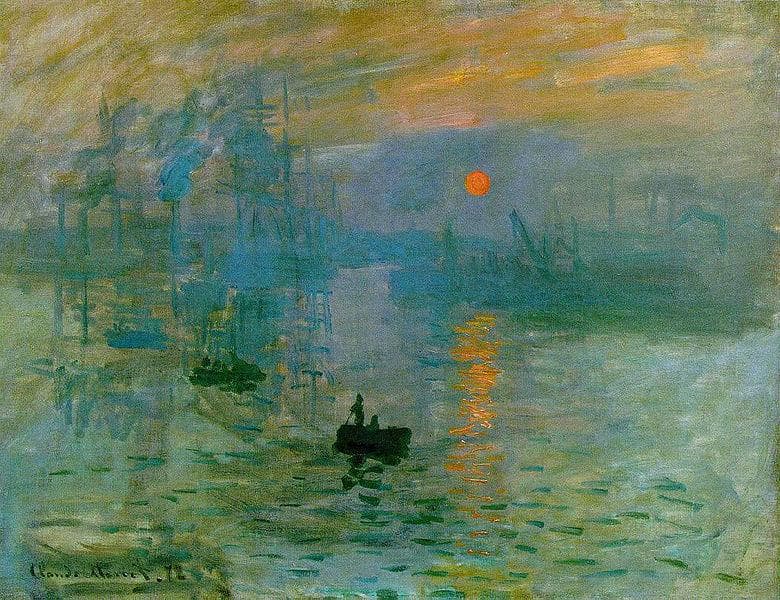
Which three-color scheme represents the complementary color scheme in this painting?
Red, Red-orange, Yellow
Green, Blue, Violet
Violet, Yellow, Blue
8
Materials an artist uses to create art are...
Applied Arts
Visual Arts
Art Processes
Art Media
9
You can change the value of a color by:
adding black or white
adding purple
adding the complement
10
This principle is the way of combining elements to stress differences between those elements
Proportion
Value
Harmony
Emphasis
11
In the description step of art criticism you list the:
Principles
Elements
Theory
12
The art & science of designing & constructing structures that enclose space:
Casting
Architecture
Sculpture
13
Which aesthetic theory does this painting exemplify?
Emotionalism
Formalism
Imitiationalism
14
Principle that combines elements in involved ways to create intricate relationships
Proportion
Harmony
Gradation
Variety
15
The following colors are secondary colors
Red, Orange, Yellow
Orange, Green, Violet
16
This principle refers to how elements are weighted in a work of art:
Variety
Proportion
Balance
Harmony
17
Action involved in creating different forms of art is...
Art Process
Art Media
Visual Art
Applied Arts
18
The principle most used in this artwork is:
Harmony
Gradation
Melody
Emphasis
19
Which of the following is not a principle of art?
Unity
Movement
Proportion
Unity
20
The design or decoration of functional objects to make them pleasing to the eye is...
Aesthetics
Visual Art
Applied Art
Art Process
21
The WARM colors are:
Blue, Green, Violet
None of these
Red, Orange, Yellow
Black, White, Gray
22
Which of the following is NOT an element of art?
Color
LIne
Form
Balance
23
This sample of color is an example of a
Tint
Line
Shade
Texture
24
This painting is an example of:
Sculpture
Portrait
Still Life
25
Unique expressions of ideas, beliefs, experiences and feelings presented in visual form is...
Applied Arts
Visual Arts
Art Media
Fine Arts
26
The building blocks of an artwork are
Shapes
Elements
Principles
Forms
27
Orange, green & violet are:
Complementary colors
Primary colors
Secondary colors
Analogous colors
28
Branch of philosophy concerned with identifying the clues within works of art is...
Aesthetics
Visual Arts
Fine Arts
Art Media
29
This principle is a wayof combining elements by using a series of gradual changes.
Gradation
Harmony
Unity
Proportion
30
The difference between the art criticism method & the art history method?
art history=outside resources
No difference
31
This three-color scheme is
Cool
Analagous
Warm
Both B & C
32
This element of art is 3-dimensional and occupies space:
Color
Form
Space
Line
33
In the analysis stage of art criticism, an art critic would focus on?
Principles
Elements
theories
34
During which stage of DAIJ do you discuss the theories of art (ie. Imitationalism)?
Description
Interpretation
Judgment
Analysis
35
Painting, sculpture and architecture are examples of ...
Applied Art
Fine Arts
ARt Process
Visual Art
36
This artwork shows the principle of?
Proportion
Gradation
Variety
37
You can use these to manipulate the elements and create an interesting composition?
Principles
Compositions
Criteria
Elements
38
The type of BALANCE where elements are not the same of both sides of a work of art is called:
Symmetrical Balance
Radial Balance
Asymmetrical Balance
39
Which aesthetic theory does this painting exemplify? A realistic representation
Formalism
Imitationalism
Emotionalism
40
Which stage of DAIJ do you identify the expressive qualities, meaning and mood of an artwork?
Description
Judgment
Interpretation
Analysis
41
During which stage of the DAIJ art criticism process do you list the elements of art?
Analyze
Interpret
Judge
Describe