stud
bud
Sign up
Log in
Home
Library
Explore
SAT
More
6th Grade Earth Science Flashcards | StudBud
Explore
/
6th Grade Earth Science
6th Grade Earth Science
29 terms
·
StudBud Administration
·
192 plays
Imported from external platform
Flashcards
29 cards
F
Practice quiz
P
Host live
L
Questions
29
Answers
1
A boundary where the plates are moving apart
fault
divergent
transform
convergent
2
A process that occurs at mid-ocean ridges where new crust is formed due to volcanic activity
Pangaea
sea-floor spreading
plate tectonics
continental drift
3
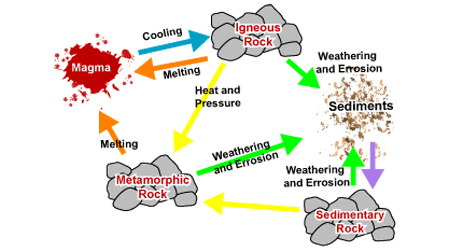
What type of rock is formed from heat and pressure?
igneous
metamorphic
all of them
sedimentary
4
What is the smallest division on the geologic time scale?
period
years
era
eon
5
What is a fossil?
traces of organisms from the geologic past
all sedimentary rock
footprints
a dinosaur bone
6
According to the diagram, Fossil A is younger than Fossil C. What law does this demonstrate?
Law of Conservation of Mass
Law of Geology
Newton's Laws
Law of Superposition
7
A crack in the Earth's crust
fault
convergent
transform
divergent
8
What might cause a background extinction?
predation
all three
low population size
competition
9
A type of dating that puts things in sequence (1st, 2nd, 3rd, etc.)
fossils
absolute dating
geologic time scale
relative dating
10
A boundary where the plates slide passed each other in opposite directions
convergent
divergent
transform
fault
11
A boundary where the plates are moving toward each other
fault
transform
divergent
convergent
12
Which is an agent of erosion?
wind
all three
animals
water
13
Which best describes weathering?
dropping off
carrying away
compacting and cementing
breaking down
14
What type of rock is formed from melting and cooling?
all of them
sedimentary
igneous
metamorphic
15
What is a background extinction? An extinction that...
caused the dinosaur extinction
only affects a few species at a time
affects a large number of species at the same time
is only caused by climate change
16
A supercontinent that formed over 250 million years ago
plate tectonics
continental drift
Pangaea
sea-floor spreading
17
What is a mass extinction? An extinction that...
only affects a few species at a time
caused the dinosaur extinction
affects a large number of species at the same time
is only caused by climate change
18
Which best describes deposition?
carrying away
breaking down
compacting and cementing
dropping off
19
What type of rock is formed from weathering, erosion, and lithification?
all of them
sedimentary
metamorphic
igneous
20
Which is an agent of weathering?
water
all three
glaciers
plants
21
Which statement is true according to the diagram?
B is the youngest
C is the oldest
none of them
A is older than B
22
Which best describes erosion?
compacting and cementing
dropping off
carrying away
breaking down
23
Why do scientists study fossils?
to prevent natural disasters
because dinosaurs are cool
to learn about the past and understand earth processes
to make sure the things in museums are accurate
24
The theory that the Earth's crust is broken up into large pieces that move
sea-floor spreading
plate tectonics
continental drift
Pangaea
25
A type of dating that gives the age (or age range) of a fossil
relative dating
absolute dating
geologic time scale
fossils
26
What is the largest division on the geologic time scale?
years
period
era
eon
27
Which fossils is youngest?
C
A
B
no way to tell
28
The theory that proposed that today's continents were once connected and they 'drifted' apart
plate tectonics
Pangaea
continental drift
sea-floor spreading
29
Which best describes lithification?
dropping off
breaking down
compacting and cementing
carrying away