stud
bud
Sign up
Log in
Home
Library
Explore
SAT
More
Cells and Taxonomy Quiz Flashcards | StudBud
Explore
/
Cells and Taxonomy Quiz
Cells and Taxonomy Quiz
20 terms
·
StudBud Administration
·
1,612 plays
Life Science Vocabulary 6th grade Units 11 and 12
Flashcards
20 cards
F
Practice quiz
P
Host live
L
Questions
20
Answers
1
Living components in the environment.
Biotic
Community
Abiotic
Population
2
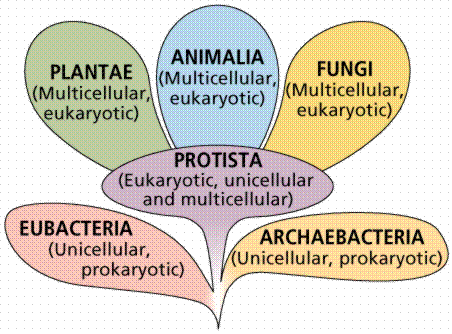
Consists of most bacteria.
Protisa
Archaeabacteria
Prokaryotes
Eubacteria
3
Includes: Phylum, Class, Order, Family, Genus and Species.
Taxonomy
Biology
Chemistry
Taxa
4
It controls all the activities of a cell, and contains the information to make new cells.
Eukaryotes
Nucleus
Genes
DNA
5
Non-living components in the environment
Abiotic
Biotic
Population
Community
6
Consists of yeast and fungus members. These break down organic materials to obtain food.
Fungi
Plantae
Protista
Animalia
7
What is the main difference between a Eukaryotic and Prokaryotic cell?
All Eukaryotic cells have a cell wall.
Only Eukaryotic cells have DNA.
Only Prokaryotic cells have Ribosomes.
Prokaryotic cells have no nucleus.
8
One celled organisms that live in extreme environments.
Archaeabacteria
Eubacteria
Prokaryotes
Protisa
9
A field of biology that study how living things are classified.
Biology
Chemistry
Taxonomy
Taxa
10
A cell structure that contains the genetic information.
Eukaryotes
Nucleus
Genes
DNA
11
What best represents what a cell is like?
A grain of sand on the beach
A classroom in a school
A page in a book
A shelf in a pantry
12
Consists of humans and all animals.
Fungi
Plantae
Protista
Animalia
13
A community of organisms and their nonliving environment.
Ecosystem
Community
Domain
Population
14
Houses all plant memebers.
Animalia
Fungi
Plantae
Protista
15
An organism that must eat in order to survive is called
Heterotrophic
Multicellular
Autotrophic
Unicellualr
16
Consists of simple eukaryotes, multi-cellular organisms.
Eubacteria
Archaeabacteria
Protista
Prokaryotes
17
An organism that can make its own food is called
Autotrophic
Unicellualr
Heterotrophic
Multicellular
18
It carries hereditary instructions and is passed from parent to offspring.
Eukaryotes
DNA
Genes
Nucleus
19
What is not a part of the Cell Theory?
Cells are the basic unit of life
All living things contain cells
All cells contain a nucleus
Cells come from pre-existing cells
20
A one-celled organism is called
Autotrophic
Multicellular
Unicellualr
Heterotrophic