stud
bud
Sign up
Log in
Home
Library
Explore
SAT
More
The Stirrings of Revolution (pp. 96-99) Flashcards | StudBud
Explore
/
The Stirrings of Revolution (pp. 96-99)
The Stirrings of Revolution (pp. 96-99)
20 terms
·
StudBud Administration
·
765 plays
This quiz tests students' knowledge of the pre-American Revolution era, from about 1765-1775.
Flashcards
20 cards
F
Practice quiz
P
Host live
L
Questions
20
Answers
1
The Intolerable Acts (1774) inspired the colonies to:
work together more closely
get reps together, forming the First Continental Congress
all of the above
switch from tea to coffee
2
What text-to-world connection can we make from The Stirrings of Revolution?
"No taxation without representation" is still true in the US
Boycotting products is an effective means for change
Protesting is still an important part of American politics
All of the above
3
What was a "lobster back"?
A brand of tea
A lobster tail
A British soldier
A loyalist
4
Reacting to the Boston Tea Party, King George enacted several new laws. These became known as:
The Last Straw
The King George Acts
The Boston Tea Party Acts
The Intolerable Acts
5
The First Continental Congress (1774) wrote a declaration of colonial rights including:
a non-violent agenda
a written proposal for independence
a further boycott on British goods
the statement that if British used force, they would fight
6
This engraving is an example of:
Newspaper sketch (no photography then)
Modern art
Propaganda
A political cartoon
7
What instigated the Boston Massacre?
A car backfired and was mistaken for gunfire
The Boston Tea Party
Riots of limited job opportunities
The colonists were cold and wanted the "red coats" coats
8
Who was John Hancock?
The inventor of a cursive font
The colonists' first famous actor
A smuggler of wine
One of the Sons of Liberty
9
How did the colonists respond to the Townshend Acts?
They blockaded Boston Harbor
They were happy to pay taxes in exchange for Brit protection
They boycotted almost all British goods
They ignored it
10
What did the Townshend Act (1767) tax?
Tea
Paper
Stamps
Sheds
11
Why did the colonists protest (violently) against the Tea Act?
Britain had promised tea for free.
They hated tea.
They were tired of Britain undermining their economy.
They shouldn't have; they misunderstood.
12
Who were the Sons of Liberty?
A militia group who fought for independence
A pacifist group of protestors
The sons of the Founding Fathers
A popular music group who galvanized the colonists
13
The Stamp Act Protests demonstrated against:
How long it took mail to get from one colony to another
King George as a leader due to rumors of his mental illness
The Proclamation of 1763
Parliament taxing the colonists without local representation
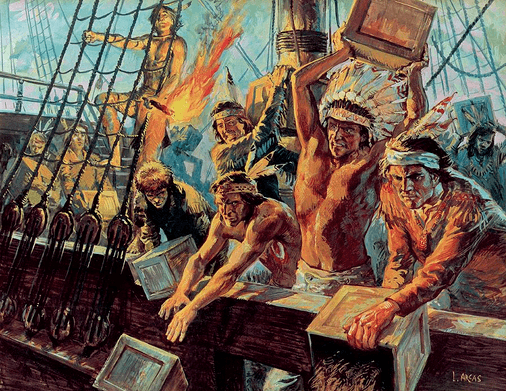
14
What does this picture represent?
The East Indian Tea Company Protest
The Boston Tea Party
The Last of the Mohicans
The Indian Revolt
15
Is this engraving an example of a primary or secondary source?
Neither
Secondary
Primary
16
What role did women play in the boycotts against Britain?
They stopped buying furs, satins, & feathers from Britain
They joined spinning bees
All of the above
They made tea instead of buying it
17
In 1773, Lord North (the prime minister) enacted the Tea Act. What did it do?
Allowed colonists to trade homemade tea with other countries
Decreased the price of tea
Required colonists only buy tea from the East Indian Tea Co.
Increased the price of tea
18
The Stamp Act:
Increased post routes across the colonies
Increased the price of postage stamps
Endorsed gambling to compensate for war expenses
Required colonists to purchase specially stamped paper
19
During the Boston Tea Party, how much tea was dumped into Boston Harbor?
18 pounds
1,800 pounds
18,000 pounds
180 pounds
20
How many people were killed during the Boston Massacre?
550
105
5
50