stud
bud
Sign up
Log in
Home
Library
Explore
SAT
More
5th Grade Solar System Review Flashcards | StudBud
Explore
/
5th Grade Solar System Review
5th Grade Solar System Review
60 terms
·
StudBud Administration
·
6,185 plays
5th grade Astronomy Unit Assessment Review
Flashcards
60 cards
F
Practice quiz
P
Host live
L
Questions
60
Answers
1
You see a crescent/ sliver again. (on the left)
waning Crescent
Waning Gibbous
Waxing Crescent
Waxing Gibbous
2
when there is more direct sunlight the Earth experiences seasons with
Warmer temperatures
Colder Temperatures
3
This is showing a __; when the moon is blocking light from the sun & casts a shadow on Earth
Lunar Eclipse
Solar Eclipse
4
Which planet is closest to the sun?
Venus
Mars
Mercury
Earth
5
When an object (sun, stars, constellations) appear to rise in the east and set in the west
gravitational pull
rotation
apparent motion
revolution
6
when there is Less direct sunlight the Earth experiences seasons with
Colder Temperatures
warmer Temperatures
7
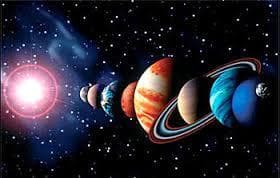
A group of objects in space that orbits a star
Solar System
planets
Galaxy
Asteroid
8
You can see half of the Moon Lighted Side (on the left)
3rd Quarter
New Moon
Full Moon
1st Quarter
9
The length of a year is different for every planet because of a planet's
rate of revolution
seasons
distance from the sun
rate of rotation
10
The shape of the moon that is lit up and can be seen from Earth
Lunar
Phases
Lunar Eclipse
Solar Eclipse
11
This feature separates Mars and Jupiter from one another
Gravity
Comet Belt
Earth
Asteroid Belt
12
The planets and moons orbit the sun because of the....
Earth's gravitational pull
Their ellipse
Sun's gravitational pull
Moon's gravitational pull
13
Irregularly shaped rock that orbits the sun
Moon
Asteroid
Sun
Comet
14
what occurs as a result of the Moon's gravitational pull
eclipses
tides
rotation
revolution
15
what two factors cause Earth's apparent motion
gravity and revolution
gravity and speed
rotation and revolution
gravity and rotation
16
To lean or slant
axis
pole
tilt
crooked
17
The side of the earth tilted away from sun receives ______ direct sunlight
more
less
18
When an object appears to move, but is not really moving
Tides
apparent motion
gravitational pull
Illusion
19
An invisible line that an object spins on
Needle
Axis
Pin
Tilt
20
The side of the earth tilted toward the sun receives ____direct sunlight
Less
more
21
The blocking of light from shining onto the moon, earth or sun
Seasons
Tides
Eclipse
Ellipse
22
when the moon passes between the Sun and Earth casting a shadow on the Earth
Solar Eclipse
Night time
Lunar Eclipse
Solar Ellipse
23
The fraction of the lighted side of the Moon that you see gets smaller each day (light on left)
Waxing Gibbous
Waning Gibbous
Waxing Crescent
Waning Crescent
24
What does this image represent
earth's rotation
earth's tilt
earth's apparent motion
earth's seasons
25
What pulls planets around the sun?
orbit
a string
ellipse
gravity
26
The amount of time it takes a planet to orbit the sun is equal to
A year
24 hours
a day
A month
27
A group of stars with a recognizable shape
Asteroid Belt
Constellations
Solar System
Comet
28
A period of the year that has special climate conditions
seasons
equinox
days
months
29
When the Earth passes between the Sun and Moon casting a shadow on the moon
Day time
Solar Eclipse
Lunar Eclipse
Lunar Ellipse
30
Having to do with the sun
Lunar
Tides
Solar
Revolution
31
Moon continues to get bigger
wax
wane
32
A single turn around something on its axis or a fixed point, spinning
Revolution
Tilt
Axis
Rotation
33
See a sliver on the right side of the moon
New moon
Waning crescent
quarter moon
waxing crescent
34
The rise and fall of the ocean
apparent motion
gravitational pull
tides
gravity
35
This is showing a __; when the earth blocks the light from the sun & casts a shadow on the moon
Solar Eclipse
Lunar Eclipse
36
What factor for planets keeps them from crashing into the Sun?
distance from sun
speed of travel
gravity
path of travel
37
The force that pulls all objects towards each other
Energy
Force
Love
Gravity
38
When gravity attracts two objects together
Gravitational Pull
Energy
Magnetism
Attraction
39
Why would it be hard to make an accurate model of the solar system for a school science project
Too many details
Too small and little space covered
Too vast and big
Boring and Unintersting
40
The shape of planetary orbits is called an
asteroid belt
ellipse
eclipse
oval
41
Can see half of the lighted side of the moon (right side)
1st quarter
waxing gibbous
waning gibbous
3rd quarter
42
To make a scale model of our solar system what units of measure has to be converted
millions of miles to larger units
miles to smaller units
millions of miles to smaller units
miles to larger units
43
Moon continues to wax, called a gibbous and is almost completely full (light on the right side)
waxing gibbous
waning gibbous
3rd quarter
1st quarter
44
Waxing
shrinking
growing
45
Waning
growing
Shrinking
46
Having to do with the Moon
Phases
Tides
Lunar
Solar
47
A very large object that orbits a star
Asteroid
Sun
Planet
Comet
48
Near round object that orbits a star, smaller than a planet, not a satellite of another object
Comet
Tiny Planet
Dwarf Planet
Black hole
49
You see the whole lighted side of the Moon
Full moon
waxing crescent
Waning crescent
New moon
50
If a planet is further from the sun, it's year is
Shorter
Longer
51
Object of ice and dust that orbits a star. Develops a long bright tail as it nears its star
Asteroid Belt
Asteroid
Comet
Ellipse
52
A single journey around an orbital path
Revolution
Rotation
Gravity
Ellipse
53
If we want to demonstrate a model of the solar system in our classroom, what should we use?
Scale Model
Real-Life model
54
Pluto, Ceres, and Eris are examples of this
Dwarf Comets
Planets
Moons
Dwarf Planets
55
A body in outer space made of hot gases that shines in the night sky
Moon
Star
Planet
Comet
56
If a planet is closer to the sun, its year is
shorter
Longer
57
Why do we see different phases of the moon?
Moon can be seen at different angles as it orbits earth
can be seen from different angles as earth orbits the moon
58
Number of days it takes Earth to orbit the sun
365 1/4
364 1/4
30
28
59
Earth orbiting the Sun is an example of
gravity
Gravitational Pull
revolution
rotation
60
Sun lights the side of the moon facing away from Earth. Moon facing Earth is dark
New Moon
quarter moon
full moon
waxing crescent