stud
bud
Sign up
Log in
Home
Library
Explore
SAT
More
Unit 3: The Emergence of the First Global Age, 15th-18th Centuries Flashcards | StudBud
Explore
/
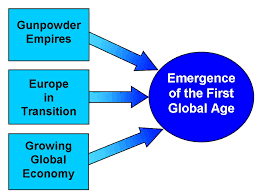
Unit 3: The Emergence of the First Global Age, 15th-18th Centuries
Unit 3: The Emergence of the First Global Age, 15th-18th Centuries
50 terms
·
StudBud Administration
·
2,849 plays
This contains questions from unit 3 of this course to practice. #highschool #socialstudies
Flashcards
50 cards
F
Practice quiz
P
Host live
L
Questions
50
Answers
1
Which of these is NOT one the three components of Enlightenment thinking?
Deism
Tolerance
Empire
Progress
2
The Spanish began to transport African slaves to the Americas by the
1490s
1450s
1530s
1560s
3
It's said the Spanish were driven by 3 things in conquering the Americas, "Gold, Glory, & _____
Grain
Gems
God
Grants
4
What was the collective mortality rates for slaves on the Middle Passage?
25%
95%
10%
40%
5
America's dichotomous culture of individual liberty combined with stringent security comes from
Locke v. Hobbes
Jefferson v. Madison
Locke v. Montesquieu
Montesquieu v. Rousseau
6
European culture was spread throughout the world due to
Naval superiority and navigation
Diseases killing indigenous peoples
Use of firearms
Strong centralized governments
7
Native Americans were forced to produce what in the Andes?
Sugar Cane
Gold
Corn
Silver
8
What was the backlash against Protestantism called?
Lutheranism
Orthodox Catholicism
Papal executive orders
The Counter-reformation
9
Slavery has existed for centuries. Who perpetuated the idea of the, "natural slave"?
Aristotle
Scientists
Ancient Civilizations
Christianity
10
One principle in the theory of mercantilism is that colonies should be
acquired as markets and sources of raw materials
granted independence as soon as possible
considered an economic burden for the colonial power
encouraged to develop their own industries
11
When Columbus first arrived in the West Indies, the indigenous people greeted him how?
They sacrificed some of them
They fired arrows at them
They asked them to leave.
They were friendly toward them
12
Luther's insistence that people should read the Bible in their own language resulted in
Increased literacy
The Counter-reformation
Lessened religiosity
Increased instruction in Latin
13
Which Florentine master is considered the greatest genius of the Renaissance?
Leonardo da Vinci
Filippo Brunelleschi
Raphael
Michelangelo
14
Which invention was key in allowing Europeans to navigate during the Age of Exploration?
Telescope
Blunderbuss
Astrolabe
GPS
15
Ivan the Great's grandson, who established a harsh precedent in Russian culture, was known as
Ivan the Terrible
Ivan the Great II
Ivan the Insipid
Ivan of Moscow
16
The First Russian state centered in the city of
Kiev
Moscow
Kulikovo
Novgorod
17
The religion of Islam emerged where?
In the Arabian Peninsula
In Africa
In India
In Persia
18
Which invention is considered one of the most important inventions of b/c it spread learning?
Paper
Firearms
Printing Press
Astrolabe
19
By 1550, the largest Spanish-speaking city in the world was
Seville
Mexico City
Havana
Madrid
20
The Renaissance was a revival of the time of _______________
Ancient Persia
Ancient Hebrews
Ancient Rome
Ancient Greece
21
People of African and European descent were known as (Not a term to use in modern times!)
Mulattoes
Mesitzos
Peninsulares
Creoles
22
The adoption of Orthodox Christianity & the Cyrillic alphabet by Russians occurred because of
territorial expansion during Catherine the Great's reign
the westernization policies of Peter the Great
contact with Byzantine culture in the 10th century
the influence of the Crusaders during the Middle Ages
23
What invention was most instrumental in the spreading of Protestantism in Europe?
The Printing Press
The Compass
Paper
Gunpowder
24
What did Luther consider most corrupt about the Catholic Church's practices at the time?
The fact there were three popes
That masses were conducted in Latin, and not the vernacular
Having papal authority in Rome and Avignon
Selling of indulgences
25
__________ created the Pieta and painted the ceiling of the Sistine Chapel in Rome
Raphael
Florence
da Vinci
Michelangelo
26
The Renaissance, which lasted from the 1300s to the 1500s, was a period of
Empire building in Europe
Traditionalism in Europe
Regional conflicts that ended in wars
Creativity and change in Europe
27
The Mongol armies led into Russia by Batu were known as the
Caliphates
Crimson Tide
Golden Horde
Parthians
28
What man was chiefly responsible for unifying Russia?
Ivan the Great
Vladimir Putin
Ivan the Terrible
Catherine the Great
29
What of these was NOT a method of resistance used by slaves against their possessors?
Outward violence
Filing of lawsuits
Damaging tools
Slow-downs in work
30
Martin Luther’s Ninety-Five Theses were a call for
greater papal authority
crusades to spread Christianity
religious revolt against the German princes
reforms within the Roman Catholic Church
31
The economic policy of mercantilism first developed during the
Cold War
Age of Revolution
Age of Exploration
The Enlightenment
32
Churchill's quote, "Russia is a riddle, wrapped in an enigma", means
Russia struggles to find a clear, unified identity
Russia is unique
It is hard to categorize Russia
Russia has isolated itself for much of its history
33
Which of the following did the Columbian Exchange NOT bring about?
Population explosion in Europe
The practice of slavery
The deaths by disease of Native Americans
Migrations of millions of people
34
Spanish plantations were most plentiful in
Peru
The West Indies
Florida
Mexico
35
Most of the Africans who died in the Middle Passage died of what?
Suicide
Beatings
Hunger
Dysentary
36
An influence that spread from the Byzantine Empire to Early Russia was the
Orthodox Christianity
use of the Latin alphabet
beginning of democracy
factory system
37
What dynasties ruled the Middle East during Mughal rule in India?
The Seljuks and Mongols
The Ottomans and Safavids
The Sufis and Mongols
The Abbasids and Umayyads
38
Muslims must learn what in order to read the Koran in its original language?
Farsi
Urdu
Arabic
Sanskrit
39
Which Enlightenment philosopher wrote the Declaration of Independence?
John Locke
James Madison
George Washington
Thomas Jefferson
40
By the 1600s what four European nations had colonies in North America?
Spain, France, England, and the Netherlands
France, England, Portugal, and the Netherlands
Germany, Spain, England, and France
Portugal, Spain, France, and England
41
If a nation ends with the suffix, "-stan", it connotes the nation is
Mostly Islamic
Formally part of the USSR
Middle Eastern
Mostly Orthodox Christian
42
What was a reason Europeans considered Africa as a place to acquire slaves?
Skilled labor force
Easy to sail there
Indigenous peoples' immunity to many diseases
No diplomatic repercussions
43
The Safavids who ruled Persia were of which Muslim sect?
Shi'ite
Saudi
Sunni
Sufi
44
Russia has a region of open grassland called a
Sahel
Berm
Savannah
Steppe
45
________ wrote a guide to rulers on how to gain and maintain power
The Prince
Raphael
Machiavelli
Petrarch
46
Where did the Renaissance begin?
France
England
Italy
Germany
47
The Rus tribe, that expanded their lands to include Kiev, were of what ethnic group?
Slavs
Saxon
Mongol
Vikings
48
Which of these groups of people would NOT be considered a Gunpowder Empire
The Mongols
The Ottomans
The Mughals
Russia
49
Which of these traits describes new world slavery compared to old world slavery?
Permanent
Not racial
Status Symbol
Not lowest social status
50
Which sentence is most accurate regarding Europe's involvement in the slave trade?
The entire continent participated
Europe took slaves from the entire African continent
Only Britain, Spain, and Portugal participated
Seven nations participated