stud
bud
Sign up
Log in
Home
Library
Explore
SAT
More
AP World History Ch 8 and 9 Practice Test - China's Unification and India's Salvation Flashcards | StudBud
Explore
/
AP World History Ch 8 and 9 Practice Test - China's Unification and India's Salvation
AP World History Ch 8 and 9 Practice Test - China's Unification and India's Salvation
40 terms
·
StudBud Administration
·
169 plays
Imported from external platform
Flashcards
40 cards
F
Practice quiz
P
Host live
L
Questions
40
Answers
1
What piece of literature outlines the 4 virtues women must abide by? Who wrote this?
Lessons for Women, Ban Zhao
Lessons for Women, Han Feizi
Lawbook of Manu, an anonymous sage
The Book of Rites, unknown
2
Who is described below?
Chandragupta Maurya
Liu Bang
Chandra Gupta
Ashoka Maurya
3
Which of the following time periods is described below?
Han dynasty
Xin dynasty
Qin dynasty
Period of the Warring States
4
What caused the decline of the Mauryan Empire?
natural disasters
economic crisis
invasions by the Persian empire
invasions by Alexander of Macedon
5
What is the collections of sayings/ideas attributed to Confucius?
the Book of Songs
the Analects
the Junzi
the Analytics
6
What is the pursuit of economic comfort and honesty? Enjoyment of social and physical pleasure?
Dharma, Moksha
Moksha, Artha
Artha, Kama
Kama, Dharma
7
Which epic honored the god Vishnu?
Mahabharata
Ramayana
The Iliad
"Song of the Lord"
8
Which epic portrayed the ideal people?
Mahabharata
The Bhagavad Gita
Ramayana
"Song of the Lord"
9
Who is described below?
Wang Mang
Chandragupta
Ban Zhao
Vardhumana Mahavira
10
Why was Buddhism more appealing than Jainism?
less demanding then Jainism
use of vernacular instead of Sanskrit
both did not recognize caste or jati
the Principle of Ahimsa
11
Which was not a technological advancement of China at this time?
cultivation of silkworms
The Royal Road
development of wood/textile based paper over bamboo and silk
iron metallurgy and expansion of iron manufacturing
12
By following the _, Buddha believed anyone could attain _, the release from pain/selfishness.
The Eightfold Path, Nirvana
Four Noble Truths, Brahma
The Eightfold Path, Dharma
Four Noble Truths, Dharma
13
Which value is of kindness, humanity, and benevolence?
Junzi
Xiao
Li
Ren
14
Whose tomb has over 8000 soldiers, 130 chariots, 520 horses, and 150 cavalry horses?
Han Wudi
Qin Shihuangdi
Wang Mang
Liu Bang
15
Which was not a trait of society in India at this time?
child marriage
Aryan-time caste system
matriarchal families
female subordination
16
What did Qin Shihuangdi not do?
reject project of connecting/extending the Great Wall
standardize laws,currencies,weights,measures, and scripts
rid scholars who criticized Qin and burned almost all books
centralize imperial rule
17
Which value is of filial piety, familial obligation, and respect for one's parents/ancestors?
Xiao
Li
Ren
Junzi
18
Which piece of literature has the dialogue between Arjuna and Krishna during the civil war?
"Song of the Lord"
The Upanishads
The Buddhist Doctrine
Ramayana
19
How did the Qin dynasty collapse?
invasions by the steppe-herders
attacks from Xiongnu
rebellions
Period of the Warring States
20
Which is not a trait of Chandragupta's government?
bureaucratic administrative system
similar to Persia and China's governments
Domestic policies: Network of spies
highly decentralized
21
What is described below? Who founded it? What did he write?
Legalism,Shang Yang, the Analects
Daoism,Laozi,Daodejing
Daoism, Laozi, the Analects
Daoism, Mencius, Tao Te Ching
22
Which is not one of The Four Noble Truths?
reach Nirvana by following the Noble Eightfold Path
the way to end all pain is to end all life
All life is suffering
Cause of all suffering is selfish desire
23
What was Confucius also known as?
Kong Junzi
Master Philosopher Kong
Confusing
Kong Fuzi
24
Where did manufacturing develop in India?
dense network of enormous workshops
Silk Road
factories
dense network of small workshops
25
Confucius only had ideas that were moral and ethical.
False
True
26
Who is the person described below?
Mencius
Han Feizi
Xunxi
Laozi
27
What is the guide for the king and his ministers on administrative methods? Who wrote it?
Arthashastra, Chandragupta's advisor
Mahabharata, Chandra Gupta's advisor
Arthashastra, Kautalya
Ramayana, Kautalya
28
What is the emphasis on meeting class obligations? Salvation of the soul?
Dharma, Moksha
Artha, Kama
Kama, Dharma
Kama, Artha
29
What is described below?
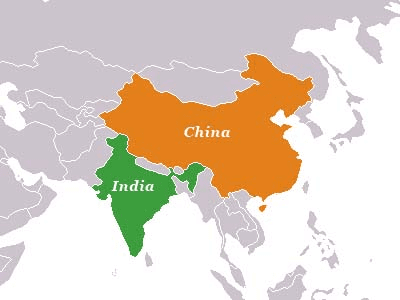
Gupta Dynasty
Former Han Dynasty
Xin Dynasty
Mauryan Dynasty
30
Which is "disengagement from worldly affairs, simple life"?
Doctrine of Wuwei
Legalism
Analects
Daodejing
31
Which value is of courtesy, respect, and deference to elders?
Ren
Junzi
Li
Xiao
32
Who is described below? What dynasty did he rule?
Han Wudi, Later Han Dynasty
Han Wudi, Former Han Dynasty
Wang Mang, Xin Dynasty
Liu Bang, Xin Dynasty
33
Who is the person described below?
Mencius
Confucius
Laozi
Xunxi
34
Who is described below?
Ashoka Maurya
Ashoka Gupta
Hammurabi
Chandra Gupta
35
Who is described below?
Han Wudi
Liu Bang
Shang Yang
Ban Zhao
36
Who was a Legalist writer and/or wrote Legalist essays?
Han Feizi
Shang Yang
Xunzi
Han Wudi
37
What is the "gentleman, superior person, description of the ideal man"?
the Filial Piety
the Confucian Values
the Junzi
the Analects
38
Which religion is based on the Upanishads and believes in the below law? Who was it founded by?
Buddhism, Siddhartha Gautama
Hinduism, Vishnu
Jainism, Vardhumana Mahavira
Mahayana Buddhism, Buddha
39
Which of the following is described below?
Legalism
Confucianism
Daoism
Sparta
40
What is described below?
The Persian Royal Road
The Silk Route
The Silk Road
cultivation of silkworms