stud
bud
Sign up
Log in
Home
Library
Explore
SAT
More
Cells and Taxonomy Review PAP Flashcards | StudBud
Explore
/
Cells and Taxonomy Review PAP
Cells and Taxonomy Review PAP
24 terms
·
StudBud Administration
·
397 plays
Life Science Vocabulary 6th grade Units 11 and 12
Flashcards
24 cards
F
Practice quiz
P
Host live
L
Questions
24
Answers
1
The cell structure in a eukaryotic cell that contains the genetic information.
Genes
Nucleus
DNA
Eukaryotes
2
Animal cell is _____________ cell because ______________.
eukaryotic, it has a nucleus
eukaryotic, it has no nucleus
prokaryotic, it has a nucleus
prokaryotic, it has no nucleus
3
A cell that contains a nuclear membrane as well as membrane bound organelles is
Viral
Prokaryotic
Heterotrophic
Eukaryotic
4
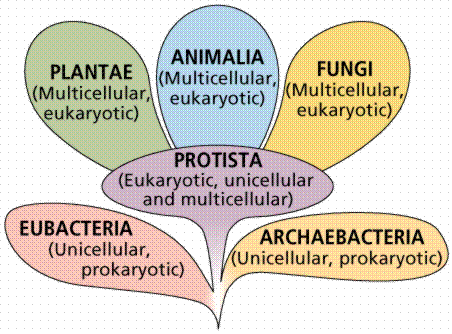
Consists of yeast, fungus and mushroom members. Break down organic materials to obtain food.
Protista
Fungi
Animalia
Plantae
5
What is the main difference between a Eukaryotic and Prokaryotic cell?
Prokaryotic cells have no nucleus.
Only Prokaryotic cells have Ribosomes.
All Eukaryotic cells have a cell wall.
Only Eukaryotic cells have DNA.
6
Living things are organized into three Domains based on the following
the source of their energy
how harmful they are to humans
the places they live
the structure of their inherited traits
7
A field of biology that study how living things are classified.
Biology
Chemistry
Taxonomy
Taxa
8
A plant that produces tiny plants that become new plants without sharing genetic information
undergoes extinction
undergoes evolution
undergoes sexual reproduction
undergoes asexual reproduction
9
How many cells in the human body?
thousands
hundreds
millions
trillions
10
Flowering plants produce offspring through
budding
sexual reproduction
regeneration
asexual reproduction
11
This tomato plant gets the energy it needs to grow because it is
multicellular
heterotrophic
autotrophic
unicellular
12
Bacteria are
unicellular
eukaryotic
heterotrophic
multicellular
13
Consists of humans and all animals.
Fungi
Animalia
Plantae
Protista
14
An organism that can make its own food is called
Multicellular
Autotrophic
Heterotrophic
Unicellular
15
What level of classification is the largest?
Family
Genus
Kingdom
Domain
16
Scientists added a new Domain to the classification system in 1990. Why?
a new species of animal was discovered
There have always been three domains
They learned more about living organisms
one of the Domains was too big
17
All organisms in this picture belong to what domain?
Eukarya
Archaea
Bacteria
Phytoplankton
18
What characteristic would identify the substance as an organism?
made of one or more cells
made of more than one atom
made of more than one element
made of one or more compounds
19
A characteristic of all living organisms
reproduce sexually
are made up of one or more cells
reproduce asexually
have structures that help them move
20
One celled organisms that live in extreme environments. Ex: very hot, cold, chemically harsh
Archaeabacteria
Protisa
Eubacteria
Prokaryotes
21
What Kingdom is eukaryotic, multicellular, heterotrophic & reproduce sexually?
Archae
Plantae
Animalia
Bacteria
22
A one-celled organism is called
Multicellular
Heterotrophic
Unicellular
Autotrophic
23
An organism that must eat other organisms in order to survive is called
Unicellualr
Heterotrophic
Autotrophic
Multicellular
24
What is the Kuiper Belt?
a gas ring around Saturn
a planet
group of comets
group of asteroids