stud
bud
Sign up
Log in
Home
Library
Explore
SAT
More
Human Body Systems Review Flashcards | StudBud
Explore
/
Human Body Systems Review
Human Body Systems Review
25 terms
·
StudBud Administration
·
125 plays
Human Body Systems Review
Flashcards
25 cards
F
Practice quiz
P
Host live
L
Questions
25
Answers
1
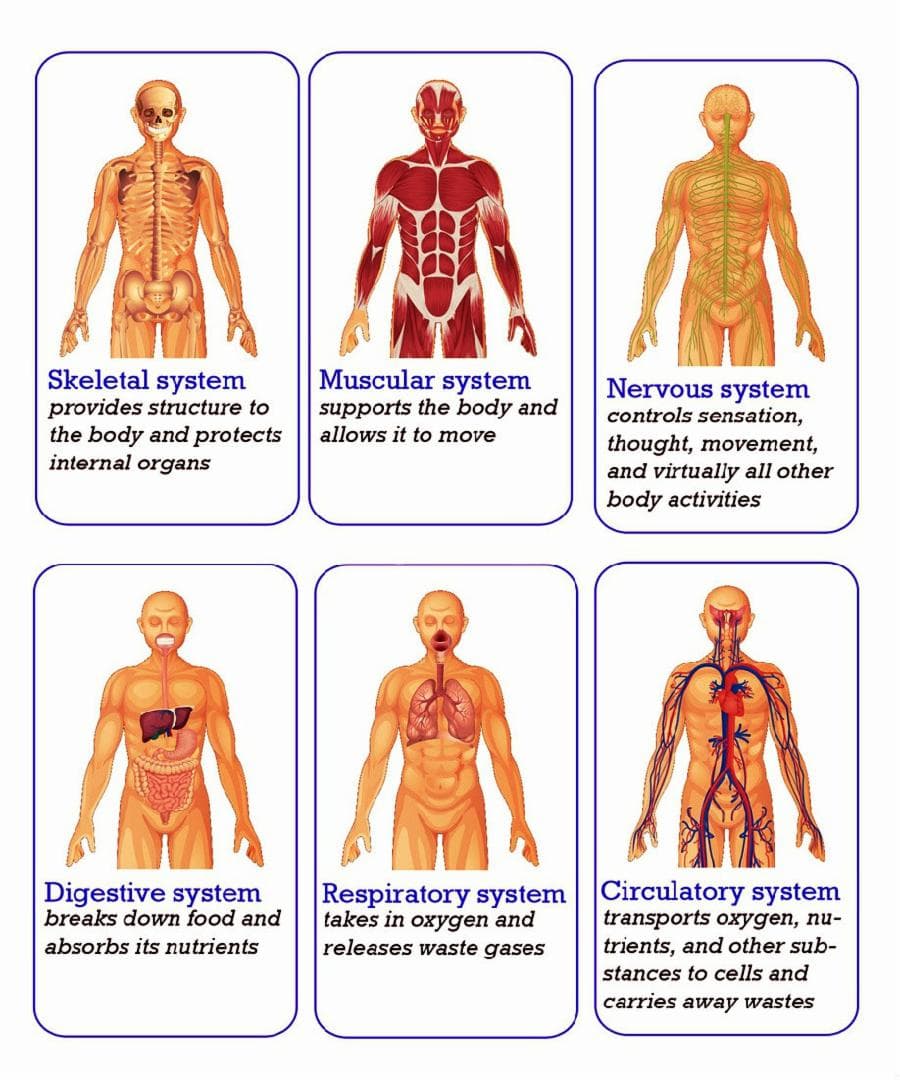
What is the function of this body system?
to provide structure and support
to bring in oxygen
to help with movement
to circulate blood
2
Which is a function of the cardiovascular system?
to transport gases throughout the body
to eliminate waste from the body
to remove toxins and hormones from the body
to provide structural support for the body
3
Which system of the human body provides protection to most of the major organs?
skeletal system
muscular system
circulatory system
respiratory system
4
How does the nervous system help you to survive?
It helps you respond to the environment
It breaks down food and removes wastes
It gathers oxygen and removes carbon dioxide
It transports fluids throughout the body
5
What happens to food in the stomach?
water is removed
nutrients are removed
it is broken down by chemicals into even smaller pieces
it is makes you feel full
6
The diaphragm contracts and relaxes to...
move the stomach to assist in the breakdown of food
force air into the lungs
force air into and out of the lungs
support the spinal column
7
Which system gives the body structure and support?
digestive system
skeletal system
muscular system
nervous system
8
The kidneys, lungs, and the skin are all part of what body system?
integumentary system
respiratory system
excretory system
circulatory system
9
What are the main components of the circulatory system?
bone marrow, ligaments, and tendons
brain, spinal cord, and neurons
heart, veins, arteries, and blood
stomach, esophagus, and small intestine
10
What is the function of the is body system?
to control all other body systems
to provide structure and supprot
to bring in oxygen
to move the body
11
Which example best shows structures that make up the respiratory system in the human body?
esophagus, stomach, intestines
nose, trachea, lungs
brain, spinal cord, nerves
heart, blood, vessels
12
What does this body system do?
takes in oxygen and expels carbon dioxide
breaks down food and expels wastes
sends electrical signals from the brain throughout the body
circulates oxygenated blood
13
Name this body system
digestive system
respiratory system
circulatory system
nervous system
14
Which part of the skeletal system protects the brain?
tibia
skull
fibula
collar bone
15
What is the main job of the respiratory system?
pumping blood to the capillaries
delivering carbon monoxide to important parts of the body
taking in carbon dioxide and delivering it to the cells
taking in oxygen and releasing carbon dioxide
16
The heart is part of the.....
skeletal system
digestive system
circulatory system
respiratory system
17
Which body system controls all other systems of the body?
muscular system
nervous system
skeletal system
circulatory system
18
Which body system sends electrical signals to all other body systems?
circulatory system
muscular system
digestive system
nervous system
19
Name this system
circulatory system
digestive system
nervous system
respiratory system
20
Which systems work together to bring in oxygen into the body and deliver it to the cells?
nervous and digestive systems
muscular and skeletal systems
nervous and respiratory systems
respiratory and circulatory systems
21
Which of the following is part of the nervous system?
a muscle
the heart
the esophagus
the brain
22
Which body system processes foods into a useable source of energy?
digestive
circulatory
nervous
skeletal
23
Which statement correctly identifies a part of the circulatory system and its function?
The brain makes decisions
The lungs take in oxygen
The heart pumps blood
The muscles move the body
24
The esophagus, stomach, and intestines are all part of one body system. Which one?
digestive system
skeletal system
nervous system
circulatory system
25
What does the digestive system do for organisms?
breaks down food
transports substances
responds to the environment
makes new organisms