stud
bud
Sign up
Log in
Home
Library
Explore
SAT
More
CA 8 Review Flashcards | StudBud
Explore
/
CA 8 Review
CA 8 Review
61 terms
·
StudBud Administration
·
9 plays
AP Art History Review
Flashcards
61 cards
F
Practice quiz
P
Host live
L
Questions
61
Answers
1
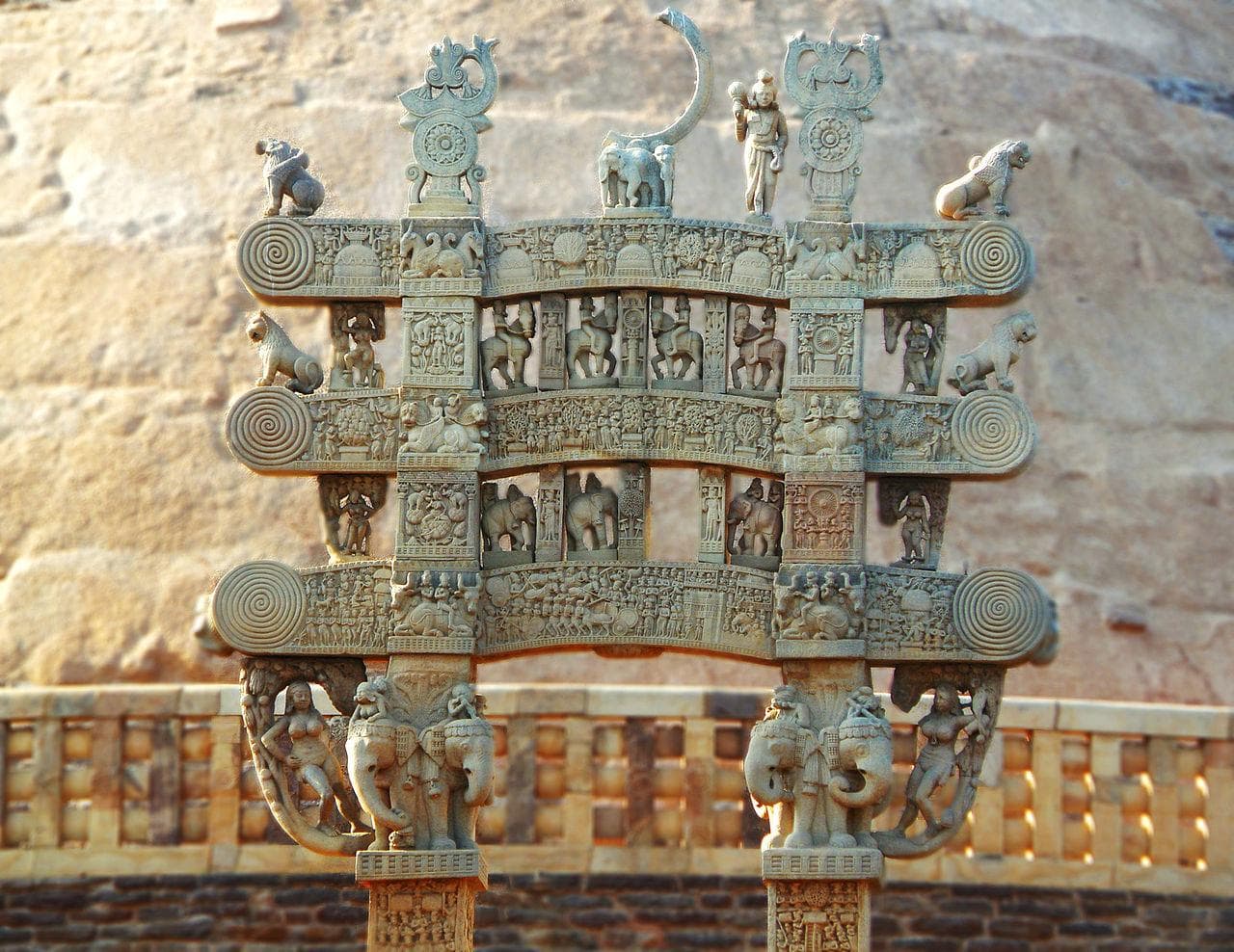
At Sanchi, the gates are at the cardinal points of the compass and are called
mithuna
mudra
stupa
torana
2
The flaming circle surrounding the deity is called a(n)
puja
sura
nimbus
darshan
3
The outside is addressed with erotic sculptures that connote
inspiration
regeneration
intolerance
subjugation
4
The David Vases were located in a
grave mound
Buddhist stupa
Hindu temple
Daoist temple
5
The insignia on his robe tells us
his spiritual beliefs
his family lineage
his age
his rank
6
The Taj Mahal
is faced in white stucco
was designed as Shaj Jahan's tomb
was made in the Chola dynasty
was meant to resemble an Islamic paradise
7
The tea ceremony is an integral part of the culture of
Indonesia
India
Japan
China
8
This work depicts
Vishnu
Tamati Waka Nene
Buddha
Shiva
9
During the reign of Jayavarman VII, this structure was used as a(n)
Hindu temple
palace
Buddhist temple
Daoist temple
10
this work is of
a Korean prime minister
a Pacific chieftain
a Chinese emperor
a Japanese emperor
11
the work illustrates
a mythical event that sheds light on contemporary society
an allegory of war and violence
a personal challenge in the face of overwhelming odds
an historical episode seen from the victor's point of view
12
The Lakshmana temple is a Hindu temple that has a narrow interior because
the interior darkness symbolizes the evil in the world
its only for high priests to enter & address the god inside
the narrow passageway symbolizes the journey to salvation
vaulting techniques were unknown
13
The work is ink and color on
paper
vellum
papyrus
silk
14
this work from the 1st Qin emperor of China has over 6,000 soldiers who are
unpainted to contrast with the colorful image of the emperor
from every social class, gender, and age in China
subtly different to show their ethnic diversity of China
alike to show their uniformity in protecting the emperor
15
This Buddhist site demonstrates how Buddhism spread from India to China on the silk road
Angkor Thom
Borobudur
Nan Madol
Longmen Caves
16
dry landscape gardens in Japanese art carry great symbolic value. The viewer was meant to
sit in the center of the garden & meditate onthe environment
arrange the rocks and sand in an artful display
be refreshed through reflection, contemplation, & meditation
use the garden as a place to refresh the spirit by painting
17
The works have inscriptions that indicates all of the following EXCEPT
when the vases were created
that the vases are accompanied by an incense burner
how the vases should be used
who the donor is
18
The following are true of the temples at Angkor EXCEPT:
Angkor Wat was built to resemble Mt. Meru
they were constructed by two different Khmer kings
Angkor Thom features images of Jayavarman as Shiva
they were built in Cambodia
19
The Hall of Supreme Harmony comes from this complex that was made in this time period
Forbidden City, 15th c.
Angkor Wat, 1400-1800 CE
Angkor Wat, 900-1400 CE
Forbidden City, 10th c. CE
20
This work is the first example of a colossal rock cut Buddha, influencing later works like
Taj Mahal
Longmen Caves in China
Jowo Rinpoche in Tibet
Ryoan-ji
21
The work is meant to be
hold a large group of worshipers inside
circumambulated on each level
viewed from a terrace
entered to present offerings to a cult statue
22
This work was built by Kmer king
Jayavarman VII
Suryavarman II
23
The Bamiyan Buddhas in Afghanistan were originally
visited by Buddhist monks
meant to be circumambulated
all of the above
painted
24
The Japanese artist that reinvigorated printmaking by layering color and depicting genre scenes
Bichitr
Fan Kuan
Katsushika Hokusai
Ogata Korin
25
This relief sculpture can be found in
Angkor Wat
Ryoan-ji
Angkor Thom
Todai-ji
26
The Bamiyan Buddhas experienced a type of _________ at the hands of the Taliban.
renaissance
iconoclasm
repurposing
regeneration
27
The three sections in the work represent
Buddha, Law, Monks
heaven, earth, and the underworld
yin, yang, and in between
3 pillars of Daoism
28
The print is based on an oil painting by
the Kei School
Sin Sukju
Liu Chunhua
John Crombie
29
The work was used to persuade people's feelings on Chairman Mao, meaning it can be considered
a holy text
propaganda
circumambulated
inconoclastic
30
The patron of the Taj Mahal was
Shah Jahan
Bichitr
Mao Zedong
Ustad Ahmad Lahori
31
This funeral banner was made for ___________________ during the ______ dynasty.
Devi, Han
Lakshmi, Qin
Lady Dai, Qin
Lady Dai, Han
32
this work is located along the Silk Road in modern day
Afghanistan
Iran
Iraq
Syria
33
This part of the Forbidden City served as the Emperor's seat
Palace of Heavenly Purity
Hall of Celestial and Terrestrial Union
Palace of Tranquility and Longevity
Hall of Supreme Harmony
34
The work depicts
Chairman Mao en route to Anyuan
the Daoist afterlife
Churning of the Ocean Milk
Queen Maya traveling to Lumbini
35
Borobudur is most similar in form and function to
Lakshmana Temple
the Taj Mahal
Great Stupa at Sanchi
Longmen Caves
36
The following are true of these gardens EXCEPT:
they are asymmetrical
the resemble large-scale natural formations found in nature
they are Zen gardens
they contain tea houses
37
The towers surrounding the building are called
mirarets
hypostyles
iwans
qiblas
38
The hand gesture of Buddha is called
a boddhisattva
a mudra
an urna
a predella
39
When visiting this Hindu temple, you would do all of the following EXCEPT:
place your offerings directly on the statue of the deity
cleanse yourself before entering and take off your shoes
bring offerings for the deity or to place on other statues
circumambulate clockwise in the Sandhara
40
This Korean crown was found
on the head of a large sculpture of Buddha
in a royal tomb buried in a mound
in Japan, given as a diplomatic gift to the Japanese emperor
in a royal sanctuary placed with other religious objects
41
This work was intended to
be enshrined in Jokhang temple
carried in a processional parade
be a cult statue in a temple
mark a royal burial
42
The artist was innovative in that he
marketed these prints to the higher class
used a new printmaking process
used heavy outlines
used the landscape as a major theme
43
Chinese blue and white porcelain was a result of
the development of Prussian blue in Europe
the influence of Dutch delftware
trade between China and Iran, in the Mongol empire
Iranian potters exporting Chinese-inspired wares
44
This person exemplified the spirit of loyalty to king and country, which is valued by
Confucianist philosophy
Daoist philosophy
Hinduism
Buddhist philosophy
45
The work is
painted silk
a hanging scroll
painted paper
ink on paper
46
These are the advantages of printmaking, as seen in The Great Wave & Chairman Mao are, EXCEPT
appeal to a wide audience
easy to mass produce
prints can only be made by the artist
they are cheap
47
The work of art is likely
the most reproduced image ever
the only one that exists
a color woodblock
created by Chairman Mao himself
48
The figure is dancing on top of a dwarf who is symbolic for
the devil
the earth
ignorance
heaven
49
Dry Japanese gardens
symbolically represent the formations found in nature
serve as centers for tea ceremonies
are modeled on landscape depicted in hanging & hand scrolls
are built to complement adjacent wet gardens
50
The works intended function was
a palace
a mosque
a stupa
a mausoleum
51
The work was meant to be
housed in a religious shrine as a moral lesson
on permanent display in a palace
put away and taken out occasionally to be viewed by people
periodically studied and examined in a library
52
The work was found
laying on the inner most coffin in a tomb
in Buddha's closet
hanging in a palace
hanging in a temple
53
The uprights probably sumbolized
riches of earthly kingdom reflects the gloryof eternal world
a distinctive royal lineage of "family tree"
everlasting peace achievable through gods
stylized tree w/ antler forms that denoted spiritual power
54
Since he is seated, full length view, his head is turned, and his hands are hidden, it reflects
Tibetan influence
Chinese influence
traditional Korean portraiture conventions
European influence
55
It is called the Forbidden City because
no one was allowed to enter
it has poisonous plants growing inside of it
it protected a statue that was forbidden from human sight
only royals could enter
56
This work and
Travelers Among Mountains and Streams
have this in common
they are folios
they were painted by the same artist
they are from Japan
they are hanging scrolls
57
The figure is dancing to
honor Shiva
Churn the Ocean Milk
destroy and recreate the world
help the spirit achieve nirvana
58
The patron and subject of this work is
Emperor Qin Shihuang
Sin Sukju
Chairman Mao Zedong
Emperor Jahangir
59
The works are made of
terra cotta with blue cobalt added for color
terra cotta treated with white gypsum
porcelain that has a fine luster added by glaze
porcelain, but unglazed with a matte finish
60
The Forbidden City is a highly expanded version of a Chinese architectural format called
a zen garden
the courtyard style residence
a central plan
a hypostyle hall
61
This temple is dedicated to
Vishnu
Daoism
Buddha
Shiva