stud
bud
Sign up
Log in
Home
Library
Explore
SAT
More
APHG Unit 3: Cultural Patterns + Processes Flashcards | StudBud
Explore
/
APHG Unit 3: Cultural Patterns + Processes
APHG Unit 3: Cultural Patterns + Processes
72 terms
·
StudBud Administration
·
2,602 plays
Imported from external platform
Flashcards
72 cards
F
Practice quiz
P
Host live
L
Questions
72
Answers
1
Which of the following regions is MOST likely to have large groups still practicing animism?
South Asia
Sub Saharan Africa
Western Europe
Central America
2
Includes all of a group’s learned behaviors, actions, beliefs, and objects
Pop Culture
Culture
Folk Culture
invisible culture
3
Which of the following is NOT a Romance language?
Portugese
Greek
Romanian
Italian
4
The blending of different cultural concepts into one.
Natavism
Syncretism
Multiculturalism
Assimilation
5
The division of Christian branches into separate autonomous religions are called
Families
Sects
Branches
Denominations
6
A repetitive act that an individual performs
Trait
Habit
Custom
Complex
7
Cultural traits spreads continuously outward from its hearth through contact among people
Hierarchical diffusion
expansion diffusion
Relocation diffusion
Contagious diffusion
8
A small religious group that breaks away from an established religion is called a/an
Diocese
Branch
Family
Sect
9
A religious group separated geographically from the rest of that religion is called a/an
Exclave
Cult
Sect
Enclave
10
The complete separation of government and religion is referred to as
Fundamentalism
Theocracy
Animism
Secularism
11
larger areas that include several regions that share languages, religions, foods, architecture
Cultural complexes
Cultural regions
Cultural hearths
Cultural realms
12
Which of the following is an example of a region with many interfaith boundaries
North America
South America
Western Europe
The Middle East
13
The visible reflection of its culture
Cultural hearths
Cultural realms
Cultural regions
cultural landscape
14
The belief that inanimate objects have spirits is called
Fundamentalism
Secularism
Animism
Monotheism
15
Type of diffusion? Pizza brought to the U.S. by Italian immigrants in the late 1800s
Relocation diffusion
Contagious diffusion
Stimulus diffusion
Hierarchical diffusion
16
Ethnic groups moving in and then out of neighborhoods, leaving unique imprints on the landscape and community
chain migration
diaspora
neolocalism
sequent occupance
17
Why is the extinction of languages a problem?
It isn't, it would be better if everyone spoke Chinese
When a language dies, part of the culture dies with it
it isn't; it would be better if everyone spoke English
It is better if you can't understand what some people say
18
Which of the following is not an accurate combination of language and religion?
Arabic/Islam
Hebrew/Judaism
Germanic/Protestant
Romance/Orthodox Catholic
19
Which of the following religions uses missionaries to spread
Judaism
Taoism
Christianity
Hinduism
20
Which of the following is an example of an ethnic religion?
Buddhism
Judaism
Christianity
Islam
21
Which of the following religions is polytheistic?
Christianity
Islam
Hinduism
Judaism
22
Which of the following is a universalizing religion?
Hinduism
Judaism
Islam
Taoism
23
The processes in which a trait diffuses from a lower class to a higher class.
Reverse Contagious diffusion
Reverse Relocation diffusion
Reverse Hierarchical Diffusion
Reverse expansion diffusion
24
A universalizing religion seeks to
Remain isolated
Maintain traditions
Make money
Convert others
25
Taboos include all except
Can change over time
no longer exist in today's world
are behaviors heavily discouraged by a culture
Can involve foods
26
simplified mixture of two languages with few grammar rules and small vocabulary
pidgin
dialect
creole
slang
27
Folk Cultures include all except
Fast to change
Relatively isolated
Small, homogenous groups of people
Often live in rural areas
28
Which of the following is the dominant branch of Islam
Mahayana
Shia
Theraveda
Sunni
29
The political boundaries of Europe follow linguistic boundaries, which follow _____boundaries.
racial
physical
economic
cultural
30
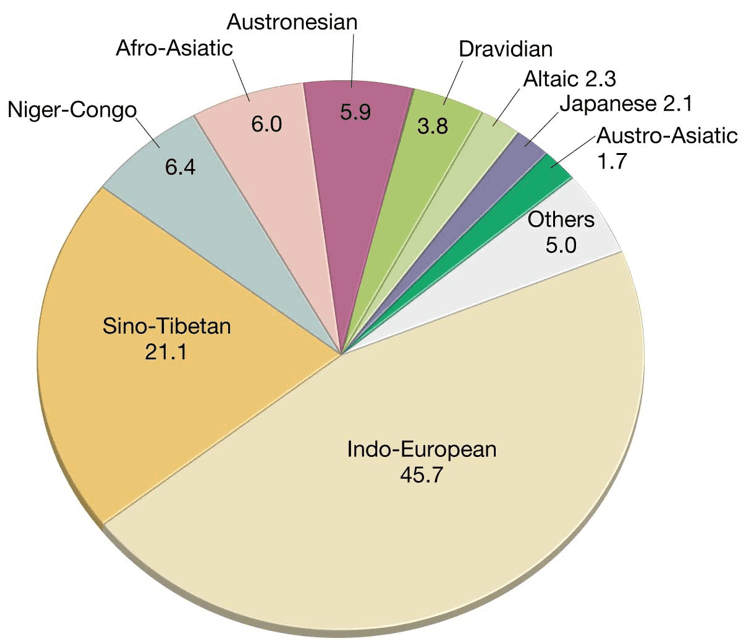
What is the second largest language family?
Afro-Asiatic
Indo-European
Sino-Tibetan
Austronesian
31
A region organized around focal point
Hierarchical (Stimulus)
Vernacular (Perceptual)
Functional (Nodal)
Formal (Uniform)
32
A strict, literal interpretation of one's religion is known as
Fundamentalism
Hierarchicalism
Secularism
Polytheism
33
Which of the following countries uses Sharia Law?
France
Argentina
Japan
Saudi Arabia
34
In folk cultures, people often have clearly defined gender-specific roles
Women work outside the house and men work in the household
Men work outside the house and women work in the household
Women serve as religious and political leaders
Men are relegated to do menial tasks in the workplace
35
Culture can be grouped into three types of regions, which include
Formal, vernacular, hierarchical
Functional, vernacular, stimulus
Formal, perceptual, vernacular
Formal, perceptual, functional
36
spread of culture from a source of authority
Relocation diffusion
expansion diffusion
Hierarchical diffusion
Contagious diffusion
37
Which of the following was an extinct language but has since been revived?
Hebrew
Gaelic
Gothic
Greek
38
Which of the following is associated with popular cultures?
Rural areas
Urban areas
Unique landscapes
Environmental Determinism
39
A government that is completely based on religion is called a/an
Fundamentalist state
Theocracy
Secular state
Autocracy
40
A boundary that separates 2 regions that speak different languages is known as
isoline
physical boundary
isogloss
delineated border
41
This chart is evidence that English is a
pidgin language
official language
lingua franca
dialect
42
A person who travels in order to spread a religion is known as a/an
Missionary
Pilgrim
Pagan
Secularist
43
Which of the following is NOT an official language of Switzerland?
Italian
Spanish
French
Romansh
44
What is NOT a factor in the creation of different dialects?
spelling
pronunciation
vocabulary
alphabet
45
process of re-embracing the uniqueness and authenticity of a place
nativism
diaspora
xenophobia
neolocalism
46
The spreading of information, ideas, behaviors, and other aspects of culture is known as
migration
diffusion
stimulus
contagion
47
the first group to establish cultural and religious customs in a space
diaspora
ethnic island
enclave
charter group
48
Under the rule of the Roman Empire, what was spoken by common people in Southern Europe?
Vulgar Latin
Standard English
Spanglish
British Received Pronunciation
49
Coexistence of several cultures in one society, with the ideal of all cultures being valued
Assimilation
Acculturation
Multiculturalism
Nativism
50
anti-immigrant attitudes that sometimes result in violence
enclave
nativism
neolocalism
diaspora
51
What language family is French a member of?
Indo-European
Autronesian
Altaic
Sino-Tibetan
52
What branch of the Indo-European language family does English belong to?
Indo-Iranian
Romance
Germanic
Slavic
53
All of the following are branches of Christianity EXCEPT
Catholics
Protestants
Eastern Orthodox
Baptists
54
One of the Five Pillars of Islam states that Muslims should take a pilgrimage to
Medina
Jerusalem
Mecca
Bethlehem
55
A large, fundamental division of a religion is referred to as a/an
Sect
Group
Family
Branch
56
Why is English the most widely spoken language in Canada and the U.S.?
British Colonialism
The Norman Conquest
Viking Explorations of the New World
The Internet
57
People in a culture adopt an underlying idea or process from another culture, but modify it
Contagious diffusion
Stimulus diffusion
expansion diffusion
Hierarchical diffusion
58
A religion with many gods is referred to as
Pagan
Monotheistic
Polytheistic
Ethnic
59
Immigrants adopt the practices of a larger group yet still maintain parts of their own culture.
Assimilation
Acculturation
Nativism
Multiculturalism
60
Why did Basque survive despite being surrounded by Indo-European languages?
contagious diffusion
isolation
innovation
distance decay
61
Muslims travelling to Mecca are an example of a/an
Pilgrimage
Diocese
Missionary
Solstice
62
A region in which everyone shares one or more distinctive characteristics
Formal (Uniform)
Vernacular (Perceptual)
Hierarchical (Stimulus)
Functional (Nodal)
63
Popular culture consists of cultural traits that include all of the following except
are adopted by various groups
Usually spreads via media, specifically internet
Promote a variety of beliefs, values, and cultural landscape
spread quickly across over a large area
64
The area in which a unique culture or a specific trait develops
Cultural middle
Cultural center
Cultural mantle
Cultural hearth
65
A ________ is a place name that reveals what is important to people and what the land is like.
toponym
lingua franca
official language
logogram
66
A group leaves its homeland and carries its culture to a new location
diaspora
stimulus diffusion
nativism
enclave
67
formal combination of two languages with extensive vocabulary and unique grammar structure
pidgin
slang
creole
dialect
68
Clusters of people of the same culture, surrounded by a different culture that is dominant
Ethnic exclave
Ethnic complex
Ethnic enclave
Ethnic hearth
69
Based on how people think about a particular area
Formal (Uniform)
Functional (Nodal)
Hierarchical (Stimulus)
Vernacular (Perceptual)
70
Popular customs most frequently originate in
less developed countries
countries with large rural populations
former communist countries
more developed countries
71
The idea that people are reborn after death is called
Reincarnation
Pilgrimage
Shaminism
Animism
72
Happens when an ethnic group can no longer be distinguished from the receiving group.
Assimilation
Acculturation
Nativism
Multiculturalism