stud
bud
Sign up
Log in
Home
Library
Explore
SAT
More
Periodic Table and Atomic Structure Flashcards | StudBud
Explore
/
Periodic Table and Atomic Structure
Periodic Table and Atomic Structure
20 terms
·
StudBud Administration
·
9,927 plays
Introduction to atomic structure and reading the periodic table.
Flashcards
20 cards
F
Practice quiz
P
Host live
L
Questions
20
Answers
1
How many protons does an atom of carbon have?
16
6
12
8
2
What is the name of the element with 92 protons in it's nucleus?
Zirconium
Uranium
Neobium
Iodine
3
How many more protons does an atom of Fluorine have than an atom of Boron?
4
13
12
3
4
How many protons does an atom of potassium contain?
78
46
15
19
5
An neutral atom of oxygen contains how many electrons?
16
8
14
6
6
Atoms of hydrogen can have zero neutrons, one neutron, or two neutrons. These are called _____
isotopes
structures
ions
atoms
7
What is the chemical symbol for copper?
CU
C
Co
Cu
8
How many neutrons does an atom of carbon with an atomic mass of 14 contain?
8
14
6
7
9
What is the atomic number for iodine?
77
53
38
49
10
Lithium has a relative atomic mass of ____________.
207.2
174.9668
138.90547
6.94
11
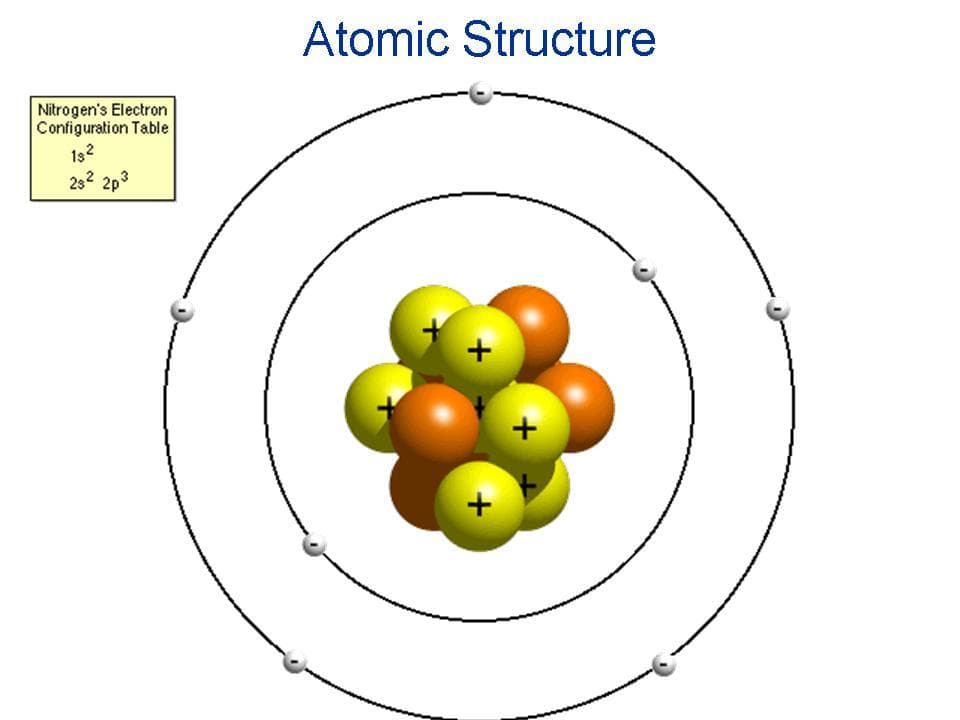
The orange particles in the picture represent ____________.
isotopes
neutrons
protons
electrons
12
How many electrons does a neutral atom of thorium contain?
22
90
52
81
13
What are the positively charged particles in the nucleus of an atom called?
neutrons
electrons
isotopes
protons
14
The negatively charged particles which travel around the outside of an atom are called _______.
electrons
isotopes
neutrons
protons
15
How many protons does an atom of nitrogen have in it's nucleus?
12
7
14
6
16
Iron has a chemical symbol of _____.
I
Ir
In
Fe
17
Lead has a relative atomic mass of _____________.
138.9054
207.2
6.94
262.56
18
A sulfur atom with an atomic mass of 34 has how many neutrons?
19
17
16
18
19
Osmium has an atomic number of ___________.
15.999
190.23
76
8
20
The particles which are shared or exchanged to create chemical bonds are called?
protons
neutrons
isotopes
electrons