stud
bud
Sign up
Log in
Home
Library
Explore
SAT
More
British Literary Periods & English Flashcards | StudBud
Explore
/
British Literary Periods & English
British Literary Periods & English
14 terms
·
StudBud Administration
·
1,770 plays
#literaryperiods #britishhistory #literarymovements
Flashcards
14 cards
F
Practice quiz
P
Host live
L
Questions
14
Answers
1
Which time period boasts scientific exploration and discovery?
Enlightenment
Victorian
Modernism
Renaissance
2
What does the word "Renaissance" mean?
new-age
memory
englightenment
rebirth
3
Which era concerned itself with the role of women, moral seriousness, & social respectability?
Viking
Renaissance
Modern
Victorian
4
A lexicon is ___?
a dictionary
an Anglo-Saxon storyteller
a gap in the middle of the line of Anglo-Saxon poetry
the order of words in a sentence
5
What literary period came immediately after the Renaissance?
Victorian Era
Romanticism
Middle Ages
Enlightenment or Age of Reason
6
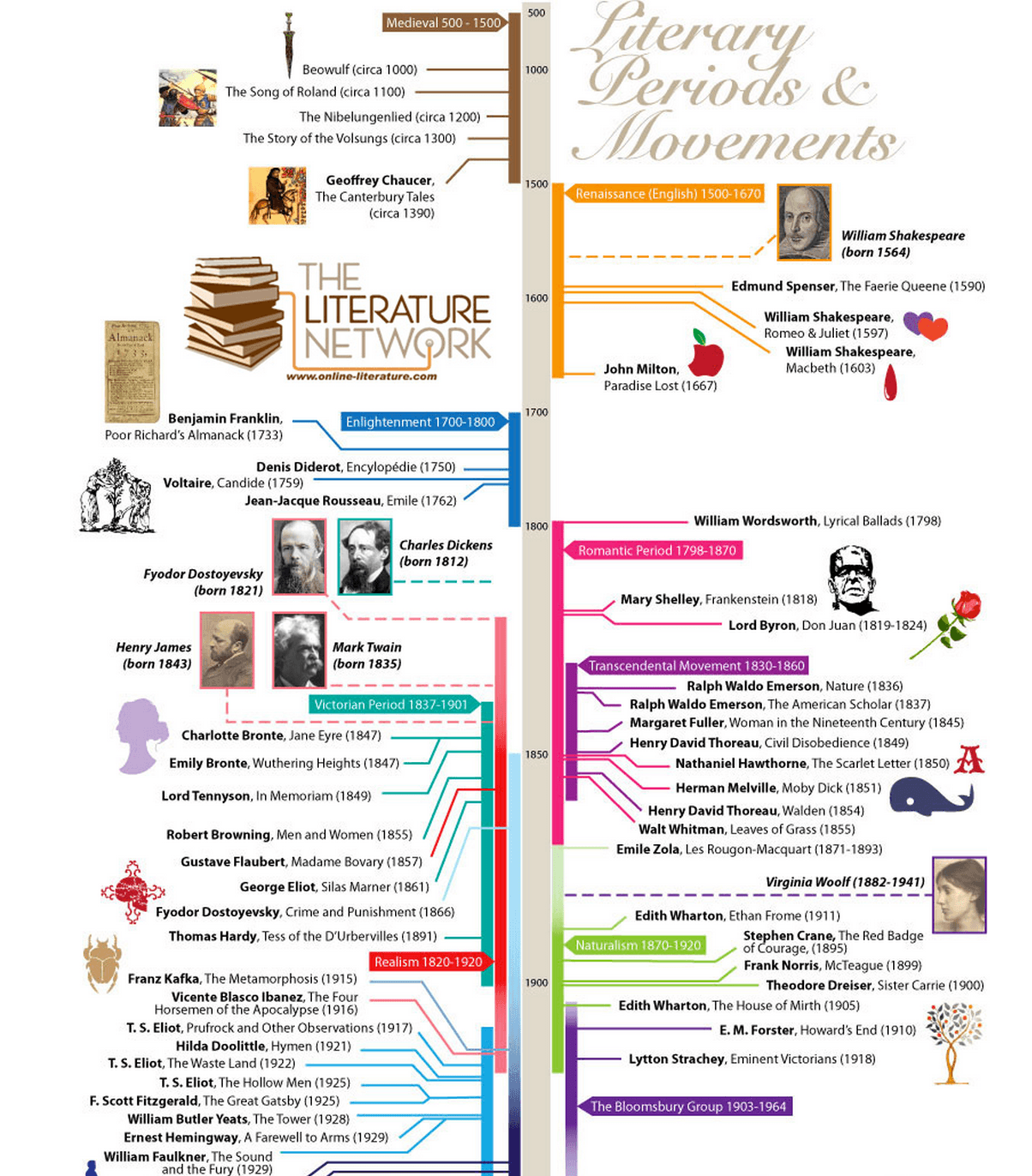
What are 5 of the MAJOR literary periods in British history?
Humanism, Colonialism, Imperialism, Renaissance, Criticism
Modern, Post Modern, Early Modern, New Age, Expressionism
Anglo-Saxon, Middle Ages, Renaissance, Romantic, Victorian
Greek & Roman, Medieval, Middle Ages, 1700s
7
When did the Middle Ages occur?
1700 CE - 1850 CE
50 BC - 400 AD
1500 AD- 1688 AD
1066 AD - 1485 AD
8
The Modern sentiments still linger today. What are they?
alienation, fragmentation, & disillusionment
heroism, loyalty, and survival
compassion for others, rebellion, and civil rights
9
Roughly how long did the English Renaissance last?
1700 CE - 1885
200 years
1400 CE -1450 CE
still ongoing
10
What is the ancestral language of English?
Greek
Slang
German
Sanscrit
11
What years did the Romantic Era last?
1832 - 1901
1660 - 1785
1785 - 1832
1880 - 1945
12
The most common form of sentiment during the Romantic Period was...
all of these
nature
emotions
concern for the individual spirit
13
The Romantic Period crosses over into...
Victorian Era
Medieval Times
Renaissance
Post-Modern Period
14
Which characteristics are in common for both Old and Middle English?
idiomatic language & inflection
words that begin with "sk" & it was only spoken
No Silent letters & flexible syntax
A new alphabet & double letters