stud
bud
Sign up
Log in
Home
Library
Explore
SAT
More
Political Ideology/Political Parties Flashcards | StudBud
Explore
/
Political Ideology/Political Parties
Political Ideology/Political Parties
40 terms
·
StudBud Administration
·
1,766 plays
Unit 3, Political Ideologies/Political Parties/Elections
Flashcards
40 cards
F
Practice quiz
P
Host live
L
Questions
40
Answers
1
One benefit of affiliation with a political party is:
It ensures the candidate a political position
It makes understanding a candidates beliefs easier
It makes electing candidates easier
It eliminates political competition
2
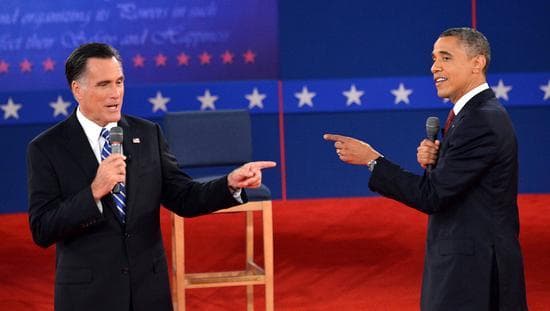
Which non-profit organization oversees Presidential Debates?
Commission on Presidential Equity
Commission on Presidential Debates
Canisteo Police Department
Democratic-Republican Alliance
3
This type of propaganda attempts to promote a particular candidate by making them seem "normal"
Testimonial
Bandwagon
Glittering Generalities
Plain Folks
4
Alexander Hamilton is associated with which of the following parties?
Democratic-Republicans
Whigs
Federalists
Nationalists
5
An example of a radical would be:
Ronald Reagan
Benito Mussolini
Lyndon Johnson
Vladimir Lenin
6
"Voters organized in favor of certain public policies"
Political Ideology
Political Preference Group
Political Assembly
Political Party
7
A conservative most likely believes in which of the following?
Slow, progressive change
Limited government
Slow, retrogressive change
Government regulation
8
The first televised debate took place between:
Eisenhower and Truman
Kennedy and Johnson
Kennedy and Nixon
Reagan and Mondale
9
Thomas Jefferson was associated with which of the following parties?
Whig
Tories
Nationalists
Democratic-Republicans
10
States which do not lean toward either party and are the focus of both Presidential Candidates:
Party Line States
Safe States
Solid States
Battleground States
11
The term “left” or “leftist” is most closely associated with those who are:
Conservative
Moderate
Radical
Liberal
12
What occurs when a third party supports a major party nominee instead of their own candidate
Fission
Elongation
Fusion
Elimination
13
Registered Democrats participating in a state's Republican Primary would be an example of:
Open Primary
Closed Primary
Candidate-Specific Primary
Delegate-Specific Primary
14
An example of a reactionary would be:
Lyndon Johnson
Ronald Reagan
Vladimir Lenin
Benito Mussolini
15
A moderate or centrist is an individual who:
Prefers rapid change
Has no political opinions
Prefers slow, sustained change
Is generally happy with the way things are
16
After the National Convention, Presidential nominees will select a running mate to form a:
Party Platform
Party Line
Presidential Pairing
Party Ticket
17
An example of a liberal would be:
Vladimir Lenin
Ronald Reagan
Lyndon Johnson
Benito Mussolini
18
The political terms “left” and “right” originated from:
The Glorious Revolution
The American Revolution
The Haitian Revolution
The French Revolution
19
Candidates will periodically meet and discuss the major issues of the election in these events
Debates
Primaries
Discussions
Caucuses
20
An example of a conservative would be:
Lyndon Johnson
Vladimir Lenin
Benito Mussolini
Ronald Reagan
21
Which state holds the first Primary?
New Hampshire
Maine
Iowa
Delaware
22
The first political parties in the United States were the:
Federalists and Democratic-Republicans
Tories and Whigs
Federalists and Nationalists
Whigs and Know-Nothings
23
Which state holds the first caucus?
New Hampshire
Delaware
Iowa
Florida
24
Using an individual's celebrity status to promote a particular candidate/viewpoint:
Glittering Generalities
Bandwagon
Plain Folks
Testimonial
25
The term “right” or “rightist” is most closely associated with those who are:
Moderate
Reactionary
Conservative
Liberal
26
The very first "modern" political parties formed in:
Germany in the 1800s
France in the 1500s
America in the 1700s
Great Britain in the 1600s
27
The last time a third party displaced a major party in the United States was in:
The 1980s
The 1850s
The 1920s
The 2000s
28
A liberal would most likely believe in which of the following?
Slow, retrogressive change
Slow, progressive change
Limited Government
Government regulation
29
What occurs when people abandon a third party because it is not likely to win the election
Elimination
Elongation
Fusion
Fission
30
According to ___________________, plurality voting systems tend to favor two parties
Duverger's Principle
Flickinger's Law
Murphy's Law
Foster's Theory
31
An individual who believe government should regulate both social and economic issues:
Authoritarian
Non-partisan
Libertarian
Moderate
32
A reactionary is an individual who:
Favors rapid retrogressive change
Favors rapid progressive change
Favors slow retrogressive change
Favors slow, progressive change
33
The total number of Electoral Votes needed to reach a majority:
338
538
270
238
34
The beliefs of a political party are officially established every few years in the party's:
Platform
Manifesto
Mission Statement
Ticket
35
A style of voting which uses a 0-9 scale to rate each candidate running for office:
Proportional Voting
Tiered Voting
Unlimited Voting
Range Voting
36
The purpose of political parties could be described as:
Attempting to get like-minded politicians elected
Bringing refreshments on Election Day
Organizing voters in favor of certain policies
Donald Trump
37
Purposely misleading or biased information designed to endorse a particular candidate/viewpoint
Propaganda
Yellow Journalism
Hate Speech
Truthiness
38
A radical is an individual who:
Favors slow retrogressive change
Favors rapid retrogressive change
Favors slow progressive change
Favors rapid progressive change
39
An individual who believes the government should only protect an individual's rights/property
Authoritarian
Egalitarian
Totalitarian
Libertarian
40
What characteristics allow the individual pictured below to run for President?
Resident of the U.S.A. for at least 14 years
Natural-born citizen
Over 35 years of Age
Awesome "flow"