stud
bud
Sign up
Log in
Home
Library
Explore
SAT
More
HIST 1301 SS#2 2019 Quiz # 1 To Antiquity Flashcards | StudBud
Explore
/
HIST 1301 SS#2 2019 Quiz # 1 To Antiquity
HIST 1301 SS#2 2019 Quiz # 1 To Antiquity
27 terms
·
StudBud Administration
·
21 plays
#histsci
Flashcards
27 cards
F
Practice quiz
P
Host live
L
Questions
27
Answers
1
Which two ancient civilizations are most often credited with the rise of numeracy?
Babylonia & Mesopotamia
Babylonia & Greece
Greece & Rome
Mesopotamia & Egypt
2
Aristotle believed that to understand nature you had to observe it without interfering with it.
False
True
3
When did fully alphabetic (written) language appear in human history?
Around 2000 BCE
Around 1500 BCE
Around 800 BCE
Around 300 CE
4
Who believed that you could trust your senses?
Socrates
Descartes
Aristotle
Plato
5
When did the Neolithic Revolution occur?
3rd century BCE
1,500-2,000 years ago
12,000-10,000 years ago
3200 BCE
6
Which of the following was NOT an important prerequisite for scientific thinking?
Literacy
Prosperity
Contact with other cultures
Democracy
7
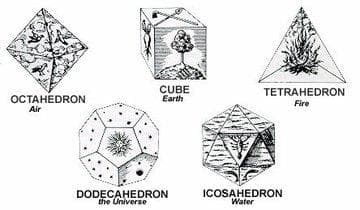
Among the Platonic solids which could not be transmuted (changed) into the others?
earth
air
fire
water
8
What does "specialisation" mean?
The educational path chosen by early natural philosophers
Community provides for members who focus on specific tasks
The use of special formulas to survey land
The refining of a crop to make it more nutritious for humans
9
What is the Fertile Crescent?
Where most of the world's food is grown today
Area in South America where llamas were first domesticated
A mountain valley in New Guinea full of lush jungle
Area with the first permanent agricultural civilisations
10
Why was the prismatic blade technology so important?
It was used to make fire
It allowed for the creation of other tools
It allowed for the creation and use of compound tools
It created rainbows with prisms
11
A Cosmogony seeks to
Pass on history
Explain the origins of the universe
Explain the basic laws of physics
Understand how the universe works
12
High rates of literacy, wealth, leisure and intellectual competitiveness were characteristic of
Ancient Greek Society.
Ancient Babylonian Society
Ancient Roman Society
Ancient Mesopotamian Society
13
Plato believed the cosmos to be the result of:
Divine reason and planning
The Big Bang
Random combinations of atoms
The will of the of the gods
14
__________ proposed that the world was separated into fire, air, earth, water, love & strife
Anaximander
Leucippus
Thales
Empedocles
15
A
Cosmology
is an explanation of:
Human civilization in Greece.
How the cosmos was formed.
How the gods created the earth.
How the cosmos functions.
16
Why did many of the early natural philosophers assume that the earth was a sphere?
They observed other planets and knew earth was the same
The sphere was a divine shape
Centrifugal force
Priests told them it was
17
The Egyptians were using a decimal number system by:
3000 BCE
2500 BCE
800 CE
150 BCE
18
What was the most pressing question for philosophers of the 6th century BCE?
Are there gods?
Is change possible?
What am I?
How does the earth move?
19
Fully Alphabetic Languages were developed by _____ and widely in use by ______
1500 BCE & 800 BCE
3000 BCE & 2000BCE
100 BCE & 200 CE
800 BCE & 500 BCE
20
The legacy of Thales of Miletus and his followers (Milesians) is the belief that:
Our world is governed by universal laws
We can understand the laws & therefore understand our world
Neither of these answers
Both of these answers
21
Diamond argues that societies with ____ are more innovative because they have time for _______
little work, large populations
large mammals. breeding
long summers, multiple crops
geographic wealth, specialisation
22
By 3500 BCE Humans could
Anticipate Seasons
Use universal mathematical symbols
Explain eclipses
Read and Write
23
What "revolution" does literacy accompany?
Palaeolithic
Neolithic
Agricultural
Industrial
24
The authenticity of scientific theory rests on
Absolute truths
History
None of these
Consensus (agreement)
25
This is an example of the early mathematics of which culture?
Roman
Mesopotamian
Greek
Egyptian
26
Neolithic technology that enabled the creation of compound tools & new tools like bone needles
Levallois Technique
Acheulean Handaxe
Prismatic Blade Technology
Chopper-Chopping Tool
27
The Babylonians were the first to systematically record observations about the universe. Why?
They were looking for alien life.
To measure time and seasons.
To understand the will of the gods.
To better understand the universe as a whole.