stud
bud
Sign up
Log in
Home
Library
Explore
SAT
More
SSUSH23 Flashcards | StudBud
Explore
/
SSUSH23
SSUSH23
27 terms
·
StudBud Administration
·
868 plays
Imported from external platform
Flashcards
27 cards
F
Practice quiz
P
Host live
L
Questions
27
Answers
1
Following the Voting Rights Act 1965, the focus of the Civil Rights Movement shifted to:
methods of disenfranchisement in southern states
de facto segregation and inequality in urban North
de jure segregation in the rural South
the plight of African-American farmers
2
in the aftermath of the Six-Day War, he assassinated Robert F. Kennedy in Los Angeles
Sirhan Sirhan
Duran Duran
Ahab the Arab
Shah van Oozi
3
Liberal Supreme Court known for rulings protecting the civil liberties of minorities:
Warren Court
Marshall Court
Taney Court
Barren Court
4
abolished at last the “national-origins” quota system that had been in place since 1921
Chinese Exclusion Act 1882
Immigration and Nationality Act 1965
Kim Wong Ark v. U.S. 1898
Emergency Quota Act 1924
5
Healthcare reform of the Johnson Administration to assist the elderly and the poor:
Romney Care
Affordable Healthcare Act
Hillary Care
Medicare/ Medicaid
6
He was assassinated by Lee Harvey Oswald on November 22, 1963 in Dallas, Texas by Oswald:
JFK
LBJ
RFK
MLK
7
idealistic and mostly youthful volunteers to bring American skills to underdeveloped countries
Yippies
Peace Corps
Yuppies
War Corps
8
His assassination led to nationwide race riots:
LBJ
MLK
RFK
JFK
9
film footage of the Kennedy assassination
Assassin's Creed
Oswald Diaries
Zapruder Film
The Magic Bullet
10
banned racial discrimination in most private facilities open to the public
Civil Rights Act 1964
Gulf of Tonkin Resolution 1964
Immigration and Nationality Act 1965
Voting Rights Act 1965
11
a flashing display of backslapping, flesh-pressing, and arm-twisting
Johnson Treatment
Jackson Treatment
12
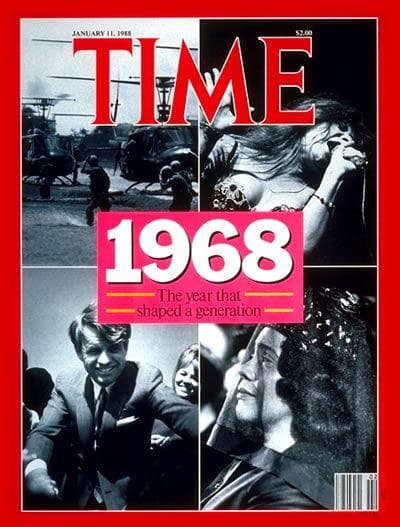
Politically and socially one of the most tumultuous years in U.S. History:
1986
1896
1968
1869
13
he assassinated Martin Luther King, Jr.
James Earl Jones
Bobbie Ray Skinner
Luke Van Winklevich
James Earl Ray
14
Following the Tet Offensive, LBJ gave a televised address in which he explained to Americans:
he would turn the war effort over to the S. Vietnamese gov.
he would not accept a party nomination for the 1968 election
he would force a surrender of N. Vietnam by using nukes
there was light at the end of the tunnel
15
Johnson's domestic agenda to fight poverty in the U.S.:
New Deal
Great Society
Fair Deal
Square Deal
16
In 1968, this political party imploded during its national convention in Chicago
Republican
Democratic
States' Rights
Progressive
17
most trusted new anchor who proclaimed there would be no decisive victory in Vietnam
Dan Rather
Tom Brokaw
David Muir
Walter Cronkite
18
areas of emphasis in the Great Society's war on poverty
Suburbia
Appalachia
Levittown
Urban slums
19
outlawed literacy tests and sent federal voter registrars into several southern states.
Civil Rights Act 1964
Voting Rights Act 1965
20
Great Society legislation ending the Immigration Quota Acts (1924)
Immigration/Nationality Act 1965
VISTA
Chinese Exclusion Act 1882
Upward Bound
21
1960s equivalent of "How the Other Half Lives" exposing poverty in America
Harrington, The Other America
Riis, Hardtimes for the American Hillbilly
Billy Ray Cyrus, Merica
Johnson, Hand Up No Hand Outs
22
one of the main reasons Great Society programs were underfunded
Korean War
Cuban Revolution
Vietnam War
Fall of China
23
He was the best hope for the Democratic Party in the 1968 election but was assassinated:
LBJ
MLK
JFK
RFK
24
Warren Court ruling that protected the 5th and 6th amendment rights of accused criminals:
Miranda v. Arizona
Roe v. Wade
Brown v. BOE
Plessy v. Ferguson
25
abolished the poll tax in federal elections
24nd Amendment
22nd Amendment
21st Amendment
23nd Amendment
26
the cause of JFK's initiative for civil rights legislation was:
the Southern Manifesto
the founding of the Southern Christian Leadership Conference
televised racial violence in the American South
the arrest of Martin Luther King, Jr.
27
State troopers with tear gas and whips assaulted demonstrators as they marched to Montgomery.
Birmingham 1963
Selma 1965
Washington 1963
Atlanta 1968