stud
bud
Sign up
Log in
Home
Library
Explore
SAT
More
LSA AJ Road to Civil War Flashcards | StudBud
Explore
/
LSA AJ Road to Civil War
LSA AJ Road to Civil War
48 terms
·
StudBud Administration
·
127 plays
LSA AJ Road to Civil War
Flashcards
48 cards
F
Practice quiz
P
Host live
L
Questions
48
Answers
1
After the fall of Fort Sumter to the Confederates, U.S. President Abraham Lincoln:
Offered to recognize the CSA as a new nation.
Made one final attempt to negotiate a peaceful solution.
Called for 75,000 volunteer troops to defend the Union.
Threatened war but did not immediately act.
2
BONUS TRIVIA:
CSA President Jefferson Davis was not born in the South, but in the border state:
Maryland
Missouri
Deleware
Kentucky
3
Opposing slavery's spread was a key part of this political party platform in the 1848 election.
Republican
Whig
Free Soiler
Democrat
4
Thanks to a split in the Democratic Party, this Republican candidate won the election of 1860.
John Bell
Stephen Douglas
Abraham Lincoln
John Breckinridge
5
Abraham Lincoln was also born in a border state too, the state of ________.
Missouri
Maryland
Kentucky
Delaware
6
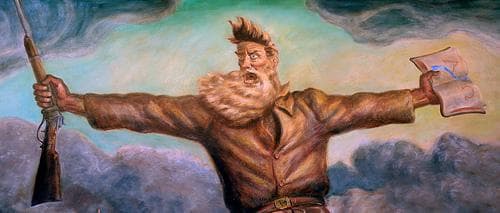
Fiery abolitionist first gained notice with the murder of 5 pro-slavers at Pottawatomie Creek.
Roger Taney
John Brown
Charles Sumner
Frederick Douglas
7
In February 1861, representatives from seven seceded Southern states met here to form the CSA.
Richmond
Charleston
Atlanta
Montgomery
8
His proposal to protect slavery below the 36-30 line was the last chance to save the Union.
John Crittenden
John Calhoun
Stephen Douglas
Henry Clay
9
Beauregard's opponent was Fort Sumter commander Major Robert Anderson, who had taught him at:
The U.S. Naval Academy at Annapolis
The Virginia Military Institute
The U.S. Military Academy at West Point
The Citadel in Charleston
10
In 1859 abolitionist John Brown & 18 others shocked the South with their U.S. arsenal raid at:
Shenandoah
Winchester
Richmond
Harper's Ferry
11
The
"great compromiser,"
he was key in both the Missouri Compromise and the Compromise of 1850.
Henry Clay
Stephen Douglas
John Calhoun
Daniel Webster
12
Violence over the slavery status of this midwest state led to it being called
"Bleeding _____."
Nebraska
New Mexico
Utah
Kansas
13
Soon after Lincoln's election, _______ became the first state to secede in December of 1860.
Virginia
North Carolina
South Carolina
Georgia
14
Slavery tensions in Congress turned violent when Preston Brooks beat Charles Sumner with a ___.
Club
Cane
Pistol Butt
Umbrella
15
This Mexican War hero and Whig won the election of 1848 without a strong stand on slavery.
Lewis Cass
Zachary Taylor
Winfield Scott
John Fremont
16
He ran as the Free Soil candidate for president in 1848, but finished a distant third.
Zachary Taylor
Lewis Cass
Abraham Lincoln
Martin Van Buren
17
Pro-slavery voters who crossed from Missouri into Kansas to vote illegally were known as _____.
Sooners
Boomers
Exodusters
Border Ruffians
18
This Maryland native was chief justice of the Supreme Court that issued the Dred Scott ruling.
John Marshall
Roger B. Taney
David Wilmot
James Buchanan
19
The Civil War began with the Confederate bombardment of Fort Sumter in _____ 1861.
June
January
April
March
20
The U.S. Marines who captured John Brown were commanded by future Confederate General ______.
Stonewall Jackson
Robert E. Lee
J.E.B. Stuart
John Bell Hood
21
The bombardment of Fort Sumter lasted ____ hours, after which the fortress surrendered.
46
34
28
24
22
Representatives from all these states were present in Montgomery in February 1861
EXCEPT:
Tennessee
Texas
Alabama
Florida
23
Illinois Congressman Stephen Douglas' nickname was ________________.
The Great Emancipator
The Great Orator
The Little Giant
The Great Compromiser
24
He called the dispute that resulted in the 1820 Missouri Compromise
"a fire bell in the night."
Stephen Douglas
Abraham Lincoln
Thomas Jefferson
John Quincy Adams
25
Confederate artillery fired on this U.S. supply ship in Jan. 1861, but it did not lead to war.
Cumberland
Merrimack
Star of the West
Housatonic
26
His election as president in 1844 meant the U.S. would be aggressive in westward expansion.
James Polk
Zachary Taylor
Millard Filmore
Martin Van Buren
27
Anti-slavery Whigs, Democrats, and Free Soilers combined to found the Republican Party in ____.
1860
1854
1857
1855
28
Brown's goal with the raid was to bring on ________.
A Congress Hearing
A Slave Revolt
A Publicity Stunt
A Revolution
29
This Mississippi Congressman was elected the first and only president of the CSA in 1861.
Jefferson Davis
John Crittenden
James Buchanan
John C. Breckinridge
30
The Missouri Compromise of 1820 prohibited further slavery above the _________ line.
36-30
38-30
30-36
49-30
31
The Democratic candidate, he won the election of 1856 with strong Southern support.
Stephen Douglas
John Fremont
James Buchanan
Millard Fillmore
32
The issue of slavery in the Mexican Cession led to a second compromise deal in ______.
1848
1849
1850
1852
33
Also a result of the Compromise of 1850, this law stirred great resentment in the North.
Intolerable Act
Fugitive Slave Act
Impressment Act
Reimbursement Act
34
All the following were reasons for the American Civil War
EXCEPT:
Slavery
Sectionalism
Manifest Destiny
Immigration
35
By the 1840s, all of the following were characteristic primarily of the North
EXCEPT:
Industrialization
Immigration
Rural
Abolition
36
Lincoln's refusal to abandon this U.S. fort in Charleston Harbor increased North-South tensions
Fort Morgan
Fort Sumter
Fort Pickens
Fort Donaldson
37
This Illinois congressional candidate gained wide notice by debating Stephen Douglas in 1858.
Abraham Lincoln
Charles Sumner
Jefferson Davis
John Fremont
38
Commander at Charleston, this Confederate general gave the order to fire on Fort Sumter.
Robert E. Lee
P.G.T. Beauregard
John Anderson
Stonewall Jackson
39
The issue of slavery delayed the admission of this state into the Union from 1836 until 1845.
California
Kansas
New Mexico
Texas
40
He proposed the 1854 Kansas-Nebraska Act to let states decide slavery status by a popular vote.
Daniel Webster
Stephen Douglas
Abraham Lincoln
Henry Clay
41
All of the following were candidates in the presidential election of 1860
EXCEPT:
Abraham Lincoln
John Bell
John Breckinridge
Daniel Webster
42
As part of the Compromise of 1850, this free state was admitted to the Union.
Kansas
Oregon
California
New Mexico
43
This 1852 book by Harriet Beecher Stowe showed the horrors of slavery and boosted abolitionism.
Birth of a Nation
Uncle Tom's Cabin
Mandingo
Gone with the Wind
44
This 1857 Supreme Court case greatly buoyed the cause of slavery and shocked abolitionists.
Washington vs. Poe
Taney vs. Georgia
Brown vs. BOE
Dred Scott
45
As part of the Compromise, this free state was created from a district of Massachusetts.
Maine
Minnesota
Vermont
Rhode Island
46
By the 1840s, all of the following were characteristic primarily of the South
EXCEPT:
Rural
Many Railroads
Slavery
Less Diverse
47
This congressman proposed a law to ban slavery in all new territory gained in the Mexican War.
Stephen Douglas
Henry Clay
David Wilmot
John Calhoun
48
All of the these political parties fielded candidates in the 1856 presidential election
EXCEPT:
Republicans
Know-Nothings
Democrats
Whigs