stud
bud
Sign up
Log in
Home
Library
Explore
SAT
More
Intro. Chapter 5 Review Flashcards | StudBud
Explore
/
Intro. Chapter 5 Review
Intro. Chapter 5 Review
26 terms
·
StudBud Administration
·
116 plays
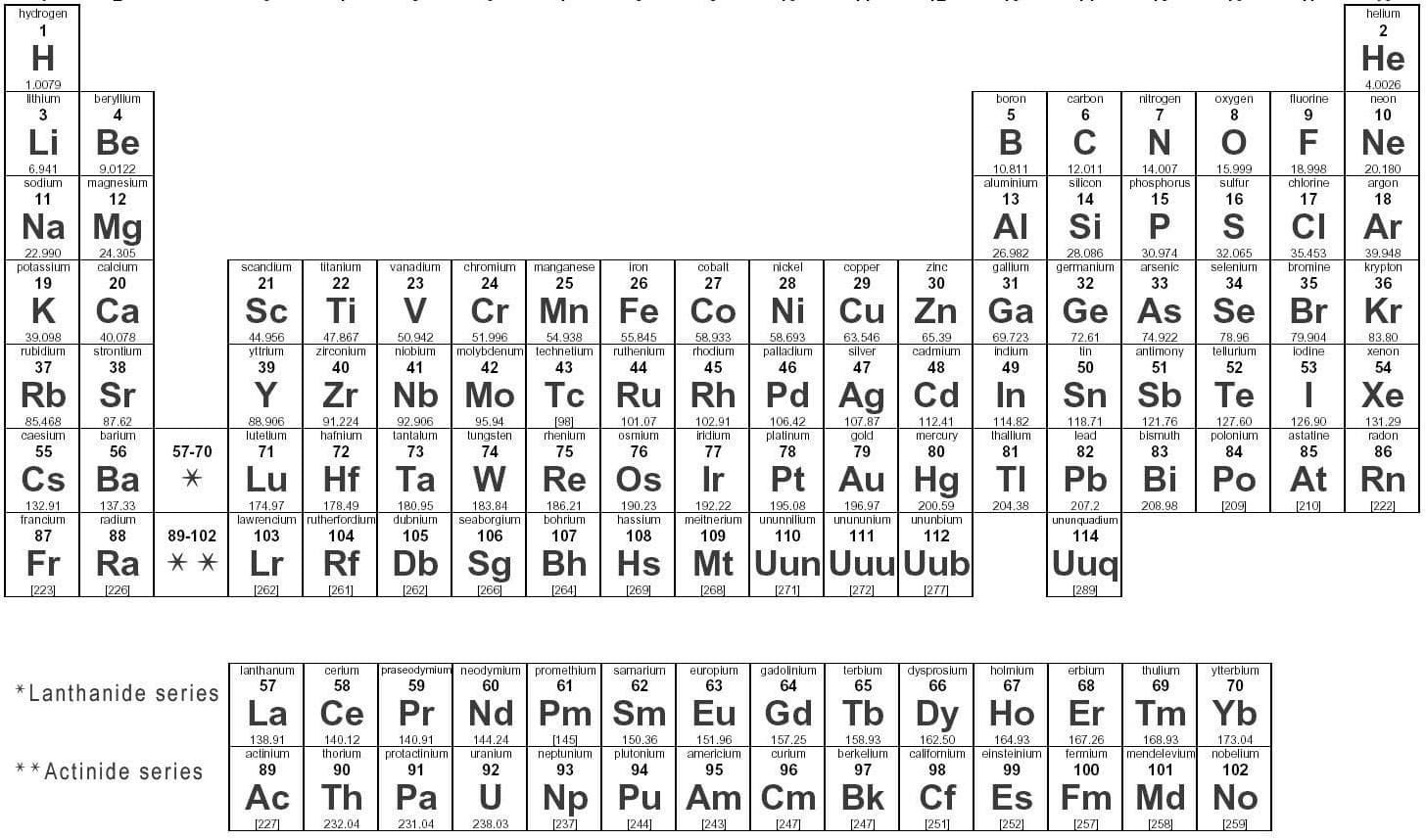
Review of periodic table organization
Flashcards
26 cards
F
Practice quiz
P
Host live
L
Questions
26
Answers
1
Which statement is
NOT
true about the elements fluorine, chlorine, and iodine?
They are all non-metals.
They are all halogens.
They are highly reactive.
They behave similarly to the noble gases.
2
The atomic mass of an element is
the number of protons in one atom of the element
twice the number of protons in one atom of the element
a ratio based on the number of protons and neurtons
the sum of protons and neutrons in one atom of the element
3
Mendeleev arranged the known chemical elements in a table according to increasing
mass
number of electrons
number of protons
atomic number
4
In a periodic table, a set of properties repeats from
column to column
row to row
element to element
group to group
5
Which statement is true about the metalloid silicon?
Carbon is a better conductor of electricity than silicon.
Silicon doesn't conduct electric current at all.
Silicon's ability to conduct electricity varies with temp.
Silicon is a better conductor of electricity than silver is.
6
As you move from left to right across a period, the number of valence electrons
stays the same
decreases
increase and then decreases
increases
7
At room temperature, none of the metals are
soft
liquid
malleable
gases
8
A member of the boron family has 3 valence electrons, while a member of the nitrogen family has
four
none
three
five
9
Which of the following group 7A elements has the smallest radius?
F (fluorine)
Cl (chlorine)
I (Iodine)
Br (bromine)
10
The unit for atomic mass is
pound
none of the above
gram
amu
11
Which of the following will form a cation?
Bromine
Sodium
Nitrogen
Copper
12
The usefulness of Mendeleev's periodic table was confirmed by
the discovery of subatomic particles
the discovery of elements with predicted properties
its immediate acceptance by other scientists
the discovery of the nucleus
13
Which of the following elements has 7 protons?
Fluorine
Lithium
Calcium
Nitrogen
14
Which of the following elements has the largest atomic radius?
Magnesium
Oxygen
Nitrogen
Boron
15
Which of the following atoms will most easily lose an electron?
Thallium
Gallium
Boron
Aluminum
16
Which of the following has the smallest atomic radius?
Carbon
Silicon
Germanium
Tin
17
Which of the following elements will form an ion with a +2 charge?
Magnesium
Carbon
Calcium
Oxygen
18
Which of the following elements has the highest ionization energy?
Phosphorus
Aluminum
Bromine
Chlorine
19
Which element below is the most reactive?
lithium
calcium
potassium
beryllium
20
Which of the following gases emit colors when an electric current is applied?
fluorine and chlorine
oxygen and nitrogen
argon and krypton
hydogen and helium
21
Which general statement does
not
apply to metals?
Most metals are malleable.
Most metals are brittle.
Most metals are good conductors of electricity.
Most metals are ductile
22
Going left to right across the periodic table, which of the following increases by exactly one?
atomic mass units
atomic number
isotope number
mass number
23
Compared with group 2 (2A) elements, group 16 (6A) have
less valence electrons
fewer protons
more valence electrons
larger radii
24
Group 17 (7A) of the periodic table contains the
alkali metals
alkaline earth metals
halogens
noble gases
25
Which list of elements contains only metals
iodine, carbon and argon
carbon, iodine and tin
helium, iron and copper
tin, copper and cesium
26
Which of the following has a larger atomic radius?
An atom of potassium
An ion of potassium