stud
bud
Sign up
Log in
Home
Library
Explore
SAT
More
Chemistry Chapter 5 Flashcards | StudBud
Explore
/
Chemistry Chapter 5
Chemistry Chapter 5
43 terms
·
StudBud Administration
·
754 plays
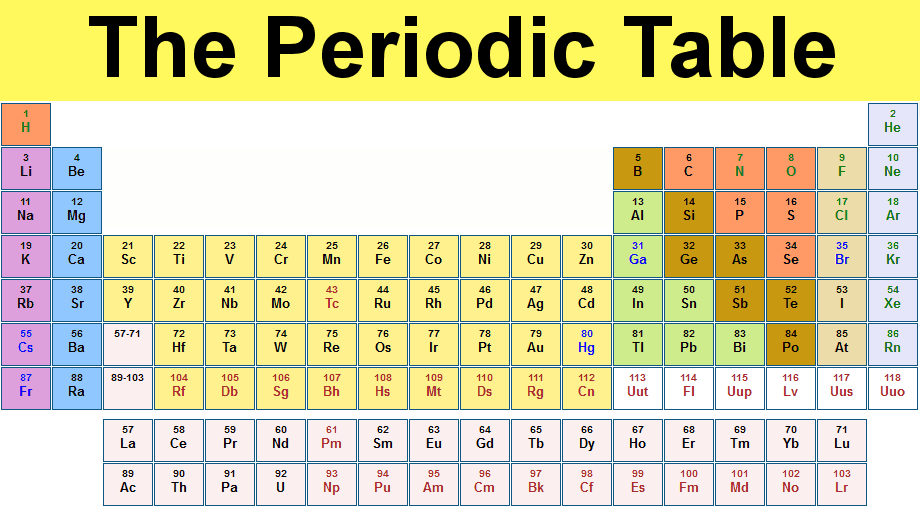
Chapter 5 review on periodic trends. Periodic table needed.
Flashcards
43 cards
F
Practice quiz
P
Host live
L
Questions
43
Answers
1
Which element has 8 valence electrons?
F
Br
Kr
S
2
Name of the group 1 elements.
Halogens
Alkali Earth Metals
Noble Gases
Alkali Metals
3
What element is in group 3 period 4?
Ga
Si
Ge
Sc
4
What element is in the oxygen family and period 4?
Te
O
S
Se
5
Electron affinity deals with what?
unbonded elements
bonded elements
6
Which element would become an anion when it completes its octet?
Na
Cl
Ca
B
7
Who gets credit for the modern periodic table?
Dalton
Moseley
Rutherford
Mendeleev
8
Which is larger? Cation or the parent atom?
Cation
Parent atom
9
These are usually gases.
non-metals
Metals
10
Which element has the smaller first ionization energy?
K
Li
Rb
Na
11
Which element has a largest first ionization energy?
Cr
Se
S
Ca
12
First ionization energy involves what?
removing the first electron from the valence shell
removing the first proton from the valence shell
adding the first proton to the valence shell
adding the first electron to the valence shell
13
How many valence electrons does Si have?
1
2
3
4
14
These have a charge of +2 because they lose 2 electrons to get a complete octet.
Alkali Metals
Halogens
Noble Gases
Alkali Earth Metals
15
The name of the group 17 elements.
alkali earth metals
noble gases
alkali metals
halogens
16
These react with halogens to form salts.
Alkali Earth Metals
Alkali metals
non-metals
transition metals
17
What determines the radius of an atom?
The number of energy levels
Mrs. Cribb
The electron cloud
The number of electrons
18
If an element A is larger than element B which will have the larger first ionization energy?
cannot tell from the information provided
A
I just don't care.
B
19
Which element is more reactive?
F
Br
I
Cl
20
These conduct heat and electricity well.
non-metals
Metals
21
What is the name of the elements in group 7A?
Alkali metals
Noble Gases
Halogens
Alkali earth metals
22
These are malleable.
Metals
non-metals
23
The name of the group 18 elements.
halogens
alkali earth metals
alkali metals
noble gases
24
How many valence electrons does Sr have?
2
3
4
1
25
These are usually brittle.
non-metals
Metals
26
Which is larger in radius?
Cl
Cl -1
27
The period number tells us what?
How many electrons there are.
How many electron energy levels there are.
How many protons there are.
How many groups there are.
28
Which element has the smaller first ionization energy?
Zn
Br
K
Cu
29
Luster is a property of what?
non-metals
metals
30
Name of the group 2 elements.
Noble Gases
Alkali Metals
Halogens
Alkali Earth Metals
31
Which has the lowest electronegativity?
Fr
Ba
O
F
32
Which element is the most electronegative?
Li
O
Fr
F
33
Metals are usually solids except for this element.
Br
Mn
F
Hg
34
Which element is more reactive?
Li
Na
K
Rb
35
What element is in group 5A period 5
Bi
Nb
Sb
Ta
36
Which elements react with active metals to form salts?
metalloids
Alkali Metals
Halogens
Nitrogen family
37
Which is larger in radius?
Na
Rb
Li
V
38
These are ductile.
non-metals
Metals
39
What are the F block elements called?
transition metals
metals
inner transition metals
transuranium elements
40
The group number tells us what?
How many electrons are in the outer shell.
Hoe many periods there are.
How many protons there are.
How many valence electrons there are.
41
The transition metals are located in this block.
S
D
P
F
42
Electronegativity deals with this.
unbonded elements
bonded elements
43
Which element would become an anion when it completes its octet?
Na
B
Cl
Ca