stud
bud
Sign up
Log in
Home
Library
Explore
SAT
More
Cells and Taxonomy Quiz - Biology 11 BC Flashcards | StudBud
Explore
/
Cells and Taxonomy Quiz - Biology 11 BC
Cells and Taxonomy Quiz - Biology 11 BC
33 terms
·
StudBud Administration
·
41 plays
Life Science Vocabulary #biology #cells #celltheory #taxonomy #classification
Flashcards
33 cards
F
Practice quiz
P
Host live
L
Questions
33
Answers
1
A field of biology that study how living things are classified.
Chemistry
Taxa
Biology
Taxonomy
2
Common names for species, such as cat, are helpful because:
It is familiar to many people in a given area
It is unique and clearly identifies the organism
It describes the bone structure of the organism
It is universal
3
What is the main difference between a Eukaryotic and Prokaryotic cell?
Only Eukaryotic cells have DNA.
All Eukaryotic cells have a cell wall.
Prokaryotic cells have no nucleus.
Only Prokaryotic cells have Ribosomes.
4
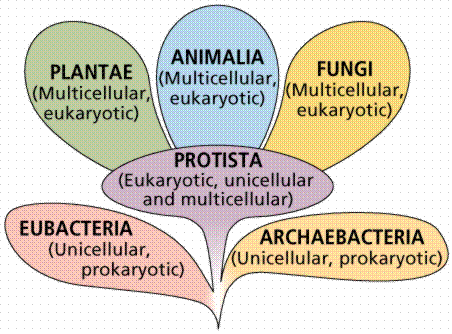
A heterotrophic organism with many cells would be in which kingdom
Animal
Plantae
Protisa
Fungi
5
An organism that can make its own food is called
Multicellular
Autotrophic
Heterotrophic
Unicellualr
6
Lysosomes are responsible for
Storage
Digestion of food
Breaking down old cells
Filtering what goes in and out of the cell
7
A one-celled organism is called
Heterotrophic
Autotrophic
Unicellualr
Multicellular
8
Which animal is the most similar to the Brown Bear
How would I know?
Cat
Wolf
Killer Whale
9
What language is used to classify organisms using binomial nomenclature
Greek
Latin
Scientific
Roman
10
One celled organisms that live in extreme environments.
Archaeabacteria
Protisa
Eubacteria
Prokaryotes
11
Is responsible for packaging proteins & lipids and transporting out of the cell
Smooth ER
Vesicles
Golgi apparatus
Rough ER
12
What is the correct order to place the levels of taxa (from broadest to specific)
Kingdom, Phylum, Class, Order, Family, Species, Genus
Domain, Species Genus, Family, Order, Class, Phylum, Kingdom
Kingdom, Phylum, Class, Order, Family, Genus, Species
Kingdom, Domain, Class, Phylum, Order Family, Genus, Species
13
Linnaeus came up with a naming system for living things called
Biotic Nomenclature
Nomenclature
Binomial Naming
Binomial Nomenclature
14
Animals do not contain these organelles (but plant cells really do)
Cell wall, cell membrane, chloroplasts
Mitochondria, chloroplasts, vesicles, cell wall
Stoma, small vacuole, cilia, flagella
Cell wall, large vacuole, chloroplasts
15
The organelle(s) responsible for protein production and protein folding is
Golgi Apparatus
Vacuoles
Edoplasmic Reticulum
Cilia
16
Consists of yeast and absorptive members. These break down organic materials to obtain food.
Protista
Fungi
Plantae
Animalia
17
Which of the following are prokaryotic
Protista
Fungi
Bacteria
Animalia
18
Most organisms in Kingdom Monera are
Archaeabacteria and Multicellular
Archaeabacteria and unicellular
Eubacteria and unicellular
Eubacteria and multicellular
19
Which of the following taxonomy levels is the most specific?
Domain
Kingdom
Species
Genus
20
Homologous structures show similarities and differences between
Two species, identifying the predecessor
Embryos at various stages show their relative relations
Body parts with similar structures and function of the body
DNA structures and when the two species diverged
21
Linnaeus primarily used this as a basis for classifying living things:
DNA
structure (morphology)
evolutionary relationships
size
22
Vocabulary word to describe: Phylum, Class, Order, Family, Genus and Species.
Taxa
Biology
Chemistry
Taxonomy
23
What best represents what the activity of a cell is like?
A grain of sand on the beach
A classroom in a school
A page in a book
A shelf in a pantry
24
What is NOT a part of the Cell Theory?
Cells come from pre-existing cells
Cells are the basic unit of life
All cells contain a nucleus
All living things contain cells
25
The nucleolus
Contains chromosomes
Contains rRNA
Organizes the nucleus
Encases the nucleus
26
Choroplasts are responsible for
Selective filtering
Cellular respiration
DNA replication
Photosynthesis
27
Prokarya and Eukarya differ primarily because:
Eukarya have organelles and Prokarya don't
Eukarya have a cell membrane but Prokarya don't
Prokarya have organelles and Eukarya don't
of size
28
An organism that must eat in order to survive is called
Multicellular
Autotrophic
Unicellualr
Heterotrophic
29
Mitochondrion is responsible for
Photosynthesis
Making and packaging proteins
Transporting materials
Cellular respiration
30
An organelle that contains genetic information and controls the cell
Nucleus
DNA
Eukaryotes
Genes
31
Select the correct name for Leopard Gecko
haliaeetus leucocephalus
Haliaeetus leucocephalus
Haliaeetus eagalus
Haliaeetusleucocephalus
32
Members of the same species must:
Have the number of fingers
Be similar size
Have the same diet
Interbreed
33
Heterotrophic means
Eats other organisms
A non-homogenous mix
Creates its own food source
Attracted to the same species