stud
bud
Sign up
Log in
Home
Library
Explore
SAT
More
Mr. E's Histories (WH Chp 3) Flashcards | StudBud
Explore
/
Mr. E's Histories (WH Chp 3)
Mr. E's Histories (WH Chp 3)
30 terms
·
StudBud Administration
·
387 plays
World History Chapter 3 Test Review
Flashcards
30 cards
F
Practice quiz
P
Host live
L
Questions
30
Answers
1
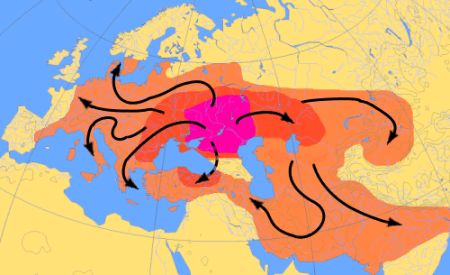
The Indo-European peoples that migrated from the steppes were mainly
traders
hunters
herders
farmers
2
The Minoans were known for all of the following EXCEPT
female-led religious ceremonies
bull-leaping for sport
painted pottery
valuing human life above nature
3
Minoan artwork from Knossos suggests that
painted pottery was broken at each bull leaping festival
Minoan women held higher rank than most neighbors allowed
Mother Earth goddess was less important than the Father Bull
bulls were kept in shrines by priestesses
4
The sacred writings of the Jewish religion are the first books of the Hebrew Bible, known as
the Old Testament
the Ten Commandments
the Torah
the Ark of the Covenant
5
The Ten Commandments became the basis for
the idea of the promised land
Moses belief that Hebrews could escape Egypt
the civil and religious laws of Judaism
the division of Israel into two seperate kingdoms
6
The Hittites were able to excel at war because of their knowledge of
poisoned arrows
superior horsemanship
ironworking
bronze smithing
7
In the Hebrew tradition, a covenant is
prophecy about the future
a law handed down by God to humanity
an ornamental chest for storing religious documents
a mutual promise between God and humanity
8
A long-term effect of the caste system in India was that
the Aryans remained dominant
dasas could not find work
Hinduism increased in popularity
Buddhism decreased in popularity
9
A Phoenician contribution that people still benefit from today was
the invention of the phonetic alphabet
the invention of the labyrinth
the invention of the sail
Introduction of Indo-Aryan languages to Europe
10
The Hebrews believed that God protected them because
of ritual sacrifice
of a covenant
of annual ceremonies
they are human
11
Jain monks wear masks over their faces
to show disdain for the caste system
to keep from breathing impurities in the air
to keep from harming even an insect
to protect each breath of atman, the sould
12
The Phoenicians were known for
phonetic alphabet, cutivation of spices, murex
shipbuilding, murex, chariots
bull-leaping, painted pottery, and female led religion
seafaring, trade, phonetic alphabet
13
Varnas, the name given to groups of the original caste system, came from a world that means
nobles
social system
skin color
purity
14
In Buddhism, the release from selfishness and pain is known as
moksha
dharma
sangha
nirvana
15
Buddhism spread across Asia mostly as a result of
missionary efforts
pilgrimages by the faithful
trade
conquest
16
According to the Torah, Moses did all of the following EXCEPT
reveal Yahweh's commandments to the Hebrews
lead the HEbrews out of Egypt
grow to adulthood as the adopted son of a princess
unify the people of Canaan into one kingdom, Israel
17
The most able seafarers of the early Mediterranean were the
Phoenicians
Hittites
Assyrians
Babylonians
18
The Hittites took the following from the Babylonian civilization they conquered
the technology needed to build chariots
the technology needed to smelt iron
the legal concept of "an eye for an eye"
a language for international use
19
Hinduism and Buddhism have a common belief in
many gods
reincarnation
the sacredness of all life
the caste system
20
The student and teacher in the Upanishads explore
ritual purity and the caste system
the Middle Way and its Noble Eightfold Path
how a person can achieve liberation from desires
the influence of dasa beliefs on the Vedas
21
The Phoenicians contributed greatly to written communication by introducing the first use of
pictographs
vowels
phonetic symbols
papyrus
22
The language that English, Sanskrit, Persian, and Spanish are all derived from is
Babylonian
Hittite
Anatolian
Indo-European
23
The Hittites occupied Anatolia (Asia Minor), a huge peninsula in modern day
Assyria
Phoenicia
Turkey
Greece
24
Hinduism and Buddhism differ significantly in their beliefs about
the caste system
perfect understanding
the cycle of history
reincarnation
25
The two items below that are most similar are
nirvana and varnas
ethical monotheism and Hammurabi's Code
moksha and nirvana
the Ten Commandments and the Four Noble Truths
26
The Indian epic poem the Mahabarata reflects the struggles
of two young lovers who wish to break the caste system
of blending a belief in Brahman with a belief in goddesses
of people trying to resign to the Four Noble Truths
that took place in India as the Aryans moved south
27
The technology of iron smelting aided the Hittites because
it gave them an alternative metal for housewares
it made strong weapons that helped them to excel at war
it allowed them to trade with Egypt for chariots
it was the first time they could create weapons of metal
28
The social class system that came to be known as the caste system was established by
Hindus
India's first residents
Aryans
Hittites
29
Israel's King Solomon was known for all of the following EXCEPT
wisdom
constructing a great temple
building a trade empire
unifying the 12 tribes
30
The emphasis on right conduct and the worship of one God is called
the Torah
the Four Noble Truths
ethical monotheism
the Ark of the Covenant