stud
bud
Sign up
Log in
Home
Library
Explore
SAT
More
Chapter 11: Part 2 Ancient Greek Beliefs and Arts Flashcards | StudBud
Explore
/
Chapter 11: Part 2 Ancient Greek Beliefs and Arts
Chapter 11: Part 2 Ancient Greek Beliefs and Arts
40 terms
·
StudBud Administration
·
326 plays
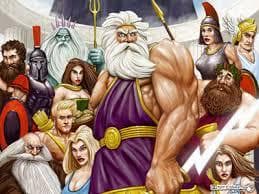
Review of Ancient Greek Beliefs and Arts for 6th grade curriculum.
Flashcards
40 cards
F
Practice quiz
P
Host live
L
Questions
40
Answers
1
Which group resented Athens’ growing power after winning the Second Persian War?
Only Sparta
Only Sparta & members of theDelian League
Sparta, members of the Peloponnesian League & Delian League
Only Sparta & members of thePeloponnesian League
2
Which land was NOT part of Alexander’s empire?
Persia
Asia Minor
China
Greece
3
In what way did the Greek gods differ from the Egyptian gods?
The Greek gods looked and behaved like people.
The Greek gods looked like animals.
The Greek gods had more power.
The Egyptian gods had more power.
4
Which Greek thinker did
NOT
make a contribution to philosophy?
Xenophon
Socrates
Zeno
Plato
5
Much of the territory conquered by Alexander the Great was previously part of which empire?
Egyptian
Athenian
Macedonian
Persian
6
What lesson did the story of Arachne teach?
Gods are have higher powers than children.
Children should be humble or they will be destroyed.
You should never smart mouth a god.
Excessive pride can destroy people.
7
Which structure is considered to be the finest example of classical Greek architecture?
The Great Library of Alexandria
The Parthenon
The stadium at Olympia
The Temple of Apollo
8
Name the scientist that first suggested that the Earth revolves around the sun.
Socrates
Aristarchus
Democritus
Aristotle
9
Which development eventually led to the Peloponnesian War?
Rivalry between Athens and Sparta for power in Greece
Athens’ jealousy over Persian support of Sparta
Creation of the PeloponnesianLeague and the Delian League
Persian attacks on Greek colonies in Ionia
10
As a result of the Peloponnesian War, all Greek city-states
lost territory to the Persian empire
came under Sparta’s control
were weaken
were finally weakened
11
Who was the first scientist to name “atoms” the particles that form all matter
Zeno
Democritus
Plato
Hippocrates
12
A long-term effect of Alexander’s conquests was
the spread of Hellenistic culture.
desertification throughout NorthAfrica
the establishment of a vast newempire
deforestation throughout Asia Minor
13
Whose comedies are still produced today?
Aesop
Aristophanes
Euripides
Aeschylus
14
Which Ruler was most responsible for uniting Greece
King Philip
Xerxes
Alexander the Great
Pericles
15
The Greeks made important contributions to philosophy and science through the use of
reasoning & observation
artistry and emotion
religion and mythology
democratic principles
16
The Greeks practiced polytheism, meaning that they believed in . . . . .
the goodness of all things in nature
many gods with supernatural power
the duty to protect Greek travelers and traders
one god who looked and acted human
17
What does the word "drama" mean in relation to theatre?
Refers to a lifestyle in which people gossip about others
It's another word for actors and actresses in Hollywood.
Greek word which means a play or performance on stage.
Refers to people who have a lot of issues in their life.
18
Whose work can be linked to the earlier observations of Thales of Miletus?
Democritus and Eratosthenes
Eratosthenes and Aristotle
Aristarchus and Democritus
Aristotle and Aristarchus
19
What was Plato’s school of philosophy called?
the Academy
the Platonics
The Stoics
the Library
20
According to the ancient Greeks’ beliefs, where did most of their major gods live?
In caves deep underground
At Delphi
On Mount Olympus
In the sea
21
Where was Macedonia?
In North Africa
In Asia Minor
On the eastern side of the CaspianSea
To the north of Greece
22
Which of the following best illustrates Greece’s lasting contribution to drama?
The incorporation of Greekmythology
The use of a distinct chorus withcommentary
The development of dramatic fables
The development of comedy and tragedy
23
What were the Olympic games?
a sporting event that honored Zeus
a sporting event that honoredAthena
a theatrical event that honoredZeus
a theatrical event that honoredAthena
24
Which poet’s work was most important in shaping Greek identity?
Pindar
Sappho
Homer
Aristotle
25
Athens’s location was an advantage during the PeloponnesianWar mainly because it
Protected Athens from attack by land.
AllowedAthens to receive grain supplies from overseas
Gave Athens an escape route to Asia Minor.
Protected Athens from merchantscarrying the plague.
26
What is the main promise of the Hippocratic oath?
to explain the universe
to do no harm
to work for less fortunate people
to be true to the Greek gods
27
Greek Mythology is the collection of stories about
Greek history
Greek military battles
Greek gods and heroes
Greek art and architecture
28
Believed that all diseases have natural causes & created a standard of conduct for doctors.
Hippocrates
Aristotle
Socrates
Plato
29
Which of the following scientist realized that the Earth is round
Aristotle
Socrates
Eratosthenes
Plato
30
The Boy that Cried Wolf, & The Tortisse & the Hare
are both what. . . <br>
legends
fables
epics
hyperboles
31
The art of ancient Greece was often connected to Greek
Religion
Sports contests
Festivals
Politics
32
The Olympic Games were held every __________ years
10
2
7
4
33
Where was the Great Library of the ancient world?
Carthage
Alexandria, Egypt
Athens, Greece
Sardis, Persia
34
The question-and-answer method of teaching used in ancient Greece is described as
Stoic
Hellenistic
Socratic
Hippocratic
35
What was the function of the chorus in Greek drama?
to perform major actions
to deal with current events
to comment on the action
to sing music between acts
36
Apollo’s priestess was known as the Delphic oracle and she
spoke in a Homeric dialect
could not be killed.
lived on Mt. Olympus
answered questions
37
For ancient Greek scientists, the main purpose of forming a hypothesis was to
generate steam power
create better weapons
explainobservations
make medicine
38
Many ancient scholars were drawn to Alexandria because of its
Universities
Library
Advanced technology
Religious practices
39
After Alexander’s death, who took over the Egyptian part of his empire?
Aristotle
Ptolemy
Cleopatra
Philip II
40
Greek mythology is the collection of stories about . . . .
Greek gods and heros
Greek History
Greek military battles
Greek art and architecture.