stud
bud
Sign up
Log in
Home
Library
Explore
SAT
More
Periodic Table Trends Flashcards | StudBud
Explore
/
Periodic Table Trends
Periodic Table Trends
33 terms
·
StudBud Administration
·
180 plays
Periodic Table Students identify groups, periodics and trends on the periodic table.
Flashcards
33 cards
F
Practice quiz
P
Host live
L
Questions
33
Answers
1
Which group has the smallest ionization energies top to bottom?
alkali metals
alkaline earth metals
halogens
noble gases
2
All elements in the same period have similar properties to one another. True/False
True
False
3
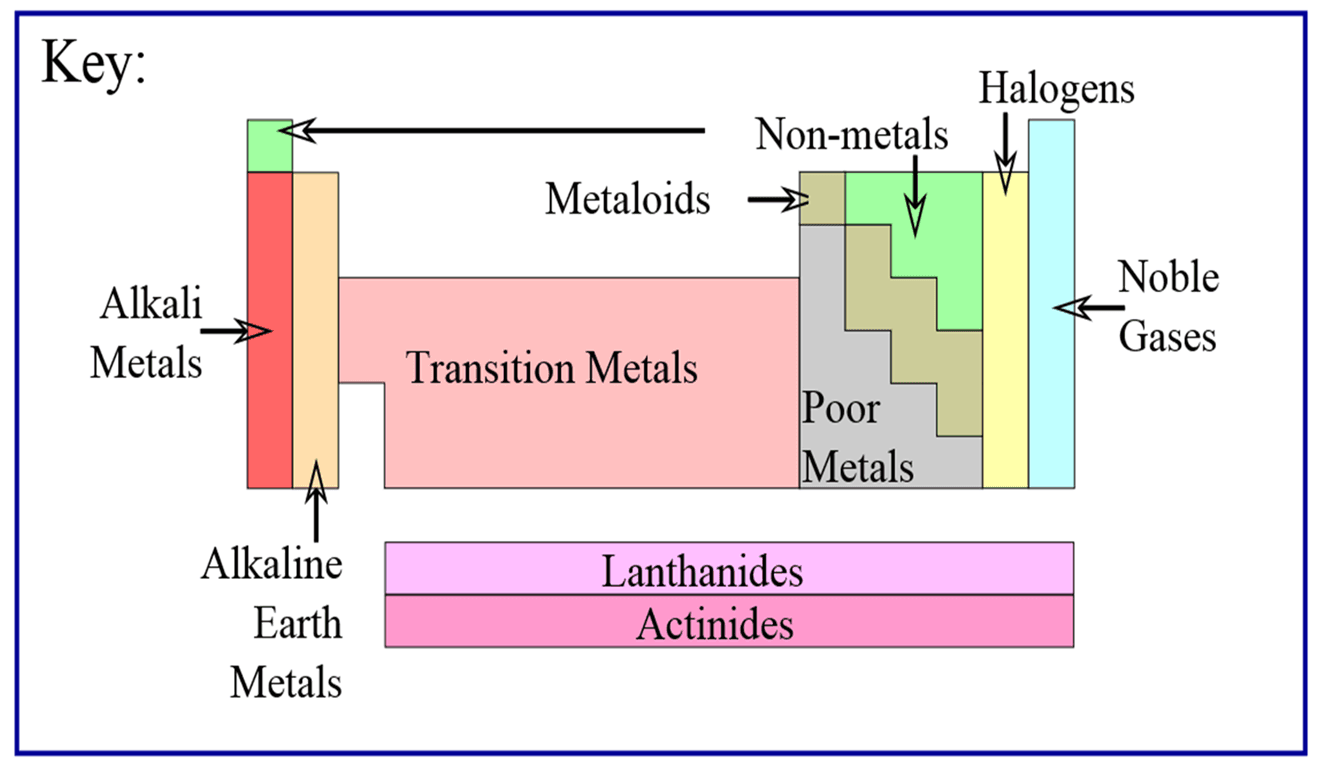
Which color group on the periodic table represents the halogens?
Red
Blue
Pink
Yellow
4
As you move down a group, atomic radius
Stays the same
Decreases
Increases
5
all electrons in the highest energy level are called
ground state electrons
valence electrons
high shell electrons
more than one of these are correct
6
As you go down a group, ionization energy
Increases
Decreases
Stays the same
7
In which period is calcium?
2
8
4
6
8
Elements in s- or p-blocks of the periodic table are called
main-group elements
transition metals
metals
alloys
9
An electron's attraction to an atom while being shared in a chemical bond is called
ionization energy
electron affinity
ionic radius
electronegativity
10
Do metal elements tend to gain or lose electrons?
Gain
Lose
11
The amount of energy it takes to remove an electron from an atom is called the
ionization energy
electronegativity
atomic radius
electron affinity
12
The largest element on the periodic table is
Francium
Radon
Fluorine
Hydrogen
13
What color are the noble gases?
Red
Blue
Orange
Yellow
14
The most electronegative element on the periodic table is
Hydrogen
Radon
Francium
Fluorine
15
What ions do alkaline earth metals form?
-2
-1
1+
2+
16
Most elements in the periodic table are metals. True or False
True
False
17
An element found in groups 3-12 of the periodic table is classified as a(n)
actinide
alloy
transition metal
alkali metal
18
The alkali metals are found on Earth only in compounds because they
are rare elements
are very reactive elements
have small atoms
are metallic elements
19
The outer shell electron configuration of an alkaline earth metal has
two electrons in the s orbital
two electrons in the p orbital
one electron in the p orbital
one elecron in the s orbital
20
Nonmetals tend to form what type of ions?
positive
two of these are true
cations
negative
21
Elements in the same group have similar properties to one another. True / False
True
False
22
Why are the noble gases unreactive?
They as gases
They the same number of protons and electrons
Full outer electron shells
They have 8 electrons in their outer shell
23
An element whose electron configuration ends in 3p
5
is in which group?
17
5
7
2
24
An electron that is found in the outermost shell of an atom and determines its reactivity is
p electron
paired electron
octave electron
valence electron
25
When determining the size of an atom, the radius of an atom bonded to the same atom is
one-fourth the distance between nuclei
equal to the distance between nuclei
twice the distance between nucleu
one-half the distance between nuclei
26
The number of electron shells (energy levels) an atom has increases as you go down a group.
False
True
27
Elements that have properties of metals and nonmetals are called
liquids
nonmetals
metals
metalloids
28
Elements increase in size as you move across a period.
True
False
29
In which group is calcium?
18
2
1
17
30
The element with the highest ionization energy is
Hydrogen
Fluorine
Francium
Radon
31
Atoms get smaller across a period because
Electrons are added in new energy levels
Electrons are added in the same energy level
Electrons are not as attracted to the nucleus
32
A metal is expected to be a(n)
insulator
conductor
nonconductor
fluid at room temperature
33
What is the name of the elements in group 1?
Alkaline Earth Metals
Alkali metals
Halogens
Carbon family