stud
bud
Sign up
Log in
Home
Library
Explore
SAT
More
EQ 1 Review Flashcards | StudBud
Explore
/
EQ 1 Review
EQ 1 Review
50 terms
·
StudBud Administration
·
139 plays
Review of the rise and fall of civilizations.
Flashcards
50 cards
F
Practice quiz
P
Host live
L
Questions
50
Answers
1
The greatest of Hammurabi's accomplishments include
a law code
uniting Mesopotamia under his rule
all of the above
a rockin' army
2
The most famous early Chinese super structure is
The Great Wall
3 Gorges Dam
Accupuncture
the Terra Cotta army
3
The Persian Empire stretches
from Greece to the Indus River
across the Northern coast of Africa
from the Yellow to the Yangtze River
across the steppes of Asia
4
The long decline of the Roman Empire includes
political violence
corruption
all of the above
barbarians at the gate
5
The fall of the Indus River Vally Civilization might be attrituted to
the arrival of the Aryans
all of the above
natural catastrophe
environmental damage
6
The fall of Rome refers to
the arrival of Attila the Hun
the Mongol invasion
the fall in 476 CE
the fall in 410 CE
7
Cuneiform is a form of
writing
math
religion
building
8
Producing a food surplus allows you to
grow your population
all of the above
trade
store food for later use
9
The Zhou Dynasty promotes the idea of the Mandate of Heaven to
punish their enemies
explain God
all of the above
legitimize their rule
10
The religion rising out of the merging of Indus Valley and Aryan belief systems is
Buddhism
Judaism
Christianity
Hinduism
11
Other basic characteristics include
writing
cities/monumental architecture
all of the above
long distance trade
12
Sumerian gods and goddesses are
jealous
vengeful
petty
all of the above
13
The rise and fall of civilizations is best characterized as
a process
an event
a catastrophe
a mistake
14
Hittites master
all of the above
a horse drawn battle chariot
iron tools
iron weapons
15
Egyptian religion contains
an idea of an afterlife
the belief that pharoahs were divine
multiple gods and goddesses
all of the above
16
The first step in the process leading to civilizations is
h/g making stone tools
h/g conquering other groups
h/g finding horses
h/g settling in farming villages
17
At times women became pharoah.
Yes
No
Seriously?
IDK
18
Hinduism stresses
karma
all of the above
reincarnation
non-violence
19
The Roman Empire controls trade along all of the
Caribbean
Mediterranean
Baltic
Adriatic
20
The fall of the Persian Empire comes
when plague sweeps through it
when drought destroys food production
when Alexander conquers it
when revolution overthrows the king
21
Confucius creates a system
of social and political order
of economic order
all of the above
of religion
22
Benefits of living along the Nile include
water for irrigation
yearly flooding which fertilizes the land
drinking water
all of the above
23
Of the over 1500 sites excavated in the Indus River Valley, two of the most well-known are
Thebes and Memphis
Athens and Sparta
Mohenjo-Daro and Harrappa
Susa and Persepolis
24
What geographic barrier(s) isolate early China?
all of the above
mountains
the Pacific Ocean
desert
25
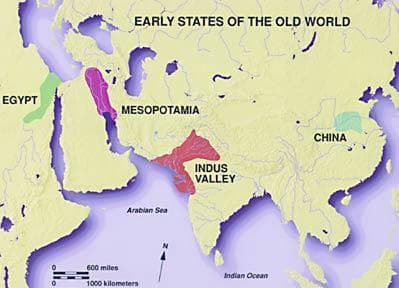
The civilization that rises along the Nile River is
the Maya
the Mongol
the Egyptian
the Inca
26
Settled farming villages leads to
all of the above
producing a food surplus
complex social orders
increasing populations
27
The political structure of the Sumerians was
city-states
nation-states
Democratic
Republican
28
To combat the decline of the empire, Diocletian
all of the above
kills his brother
goes to war
cuts it in half
29
Basic characteristics of civilizations include
organized government
all of the above
social classes
complex religion
30
Our earliest human ancestors lived in
settled farming villages
nomadic h/g goups
condos
cities
31
The civilization that rises in the area between the Tigris and Euphrates rivers is known as
Mesopotamia
Mesoamerica
Mesolithic
none of these
32
The Mandate of Heaven explains
sunrise and sunset
the rise and fall of dynasties
how to get to heaven
none of the above
33
Civilizations are a way of organizing
economically
politically
socially
all of the above
34
A ziggurat is
a pyramid
all of the above
dedicated to the city's god or goddess
a temple
35
A major accomplishment of the Egyptians was
pyramids
hieroglyphics
massive irrigation works
all of the above
36
Each city-state had its own
patron god or goddess
social order
all of the above
king
37
The Hellenistic World is created when
the Aryans invade the Indus River
Philip II unites Greece
Alexander conquers Persia
Julius Caesar crosses the Rubicon
38
New World Civiliations differ from Old World ones because they do not
use irrigation
produce food surpluses
have kings
rise in river valleys
39
The Indus River Valley civilization has evidence of
centralized government
all of the above
monumental architecture
long distance trade
40
The Hellenistic World combines which of the following elements?
Indian
Persian
Greek
all of the above
41
The ruler of the Egyptians is called
Pharoah
John
Emperor
Vizier
42
Cyrus and Darius are great kings of the
Persian Empire
Empire Strikes Back
Roman Empire
Mongols
43
Sumerians, Hittites, Assyrians, Babylonians were all empires in Mesopotamia.
IDK
Yes
Maybe
No
44
China has 4000 years of history.
Maybe
IDK
No
Yes
45
The Hellenistic Empire comes to an end with
a war with Carthage
a Mongol invasion
a Persian uprising
Alexander's death
46
The civilization that rises along the border of modern day India and Pakistan is
the Aztec
Yellow River
Mesopotamia
Indus River Valley
47
The global trade network starting in China and ending in Rome is known as
the Indian Ocean trade network
the Royal Road
the Silk Road
the Himalaya Highway
48
The Aryans bring with them
caste system
all of the above
their own religious beliefs
iron working
49
Roman conquest depends on its
roads
legions
all of the above
fair treatment of conquered people
50
The Neolithic Revolution refers to the shift from
that thing that happens in France
h/g to herding
the arrival of the Mongols
h/g to farming